Fabric as Memory: Jinson Abraham's Calendar of Resistance in Thiruvananthapuram
Jinson Abraham's Kollavarsham 1202: Munnē: Ippōzh: Ini runs at College of Fine Arts, Thiruvananthapuram until November 10, turning cloth into an archive of caste and gender.
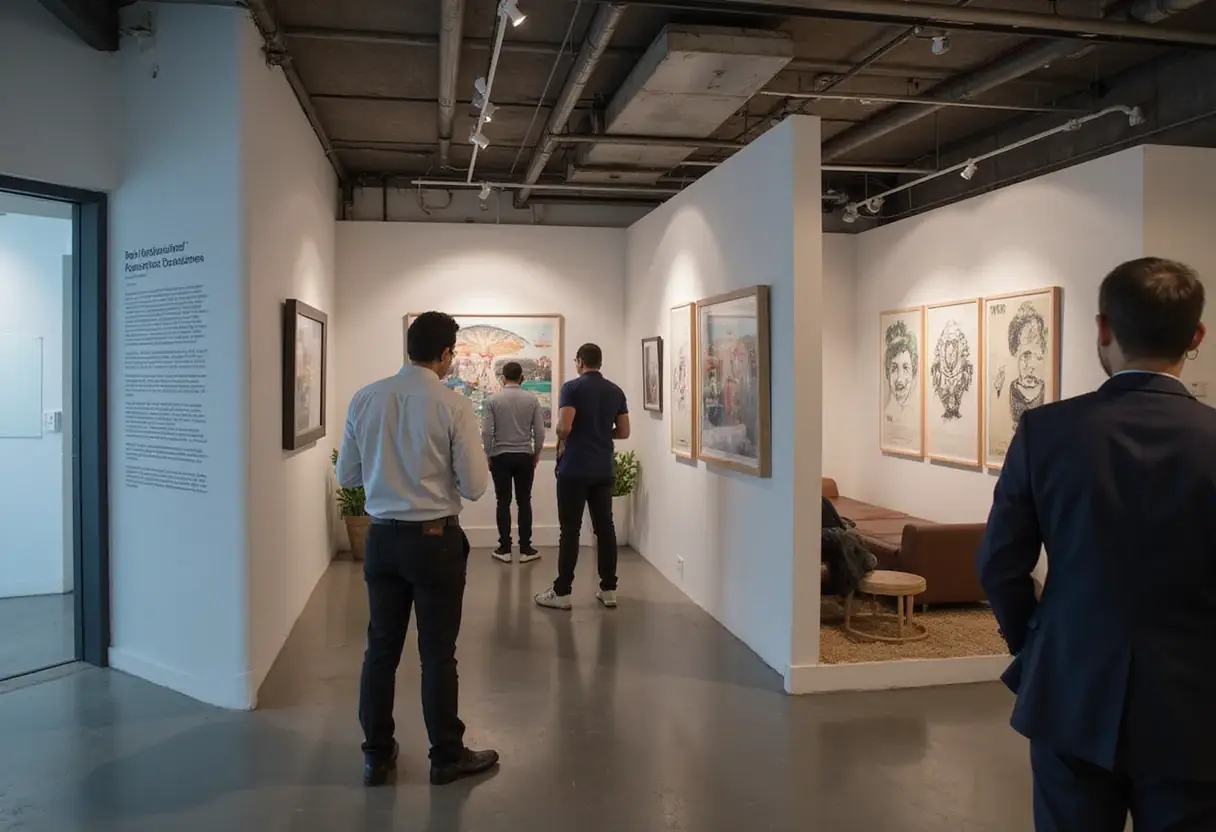
A photography exhibition that defines time itself as a goddess runs until November 10 at the College of Fine Arts (CFA) in Thiruvananthapuram. Jinson Abraham's Kollavarsham 1202: Munnē: Ippōzh: Ini — the title translates as Past: Present: Future — stages fabric as both identifier and constraint, extending his earlier work on Kollavarsham, the Malayalam calendar, into a full-body argument about who got to wear what, and at what cost.
The show splits into two parts: Udal (The Body) and Archivals of Uprising. Together they run to 28 photographs — 15 in the first section, 13 in the second. Modest in number. Not so modest in ambition.
What does Udal actually show?
The 15 sepia-tinted monochrome portraits of Udal, all shot on a Sinar F2 large-format camera, turn the body into what Abraham calls a living archive for the marginalised — people carrying traces of "dispossession, labour, caste, and resistance". These are subjects "denied landownership, caste privilege and basic human dignity", the photographer notes, and absent from history books. The portraits place them as "bearers of agency, memory and dignity".
The series opens with nudes, and the reasoning is blunt. "Nobody thought about covering the body for years," Abraham says. "However, they may have been forced to do so, to protect themselves from the wind, rain, cold or animals. The body can exist without a cloth. People would have depended on it to protect them, but then the clothes would have been the same for men and women."
From there, the portraits track how fabric became a social verdict in Keralam — deciding who deserved rights and who faced oppression. In one image, a woman clad in kasavu, the signature Kerala cotton with its gold border, has no historical right to wear the very fabric she wove. The photograph reclaims that agency by dressing her in it anyway.
A pair of photographs takes on the 17th-century taxes: the moustache tax, or meeshakaram, and the breast tax. Abraham frames the asymmetry with a question that does most of the series' ideological work: "While men paid taxes for moustaches, women didn't have to. But here's the interesting question. Men could eliminate the tax by shaving their moustache off, but what do you do about breasts?"
Later images show women taking control of their own bodies, and a portrait of a man in a kurta stands in for reformers — Sreenarayana Guru, BR Ambedkar, Ayyankali — who rejected prescribed caste dress. The closing stretch traces women's fashion through an animal gaze, then a colonial gaze, then a male gaze. "It was at this juncture, where we see people attributing violence against women to the length of their clothes, holding it responsible for crimes against them," Abraham says. The final frame is a couple's portrait, carrying a message about men being taught women's empowerment without learning how to coexist with women.
How do you photograph a calendar?
The Archivals of Uprising section literalises the show's title. Thirteen portraits — 12 rashi chakras and one sun, by Abraham's count — represent Kalam, the goddess of time, and the 12 months of the Kollam Era calendar, from Chingam through Karkkadakam. Each portrait sits beside Malayalam numerals, shot on 4x5 square inch sheet film and developed by photographer Alekh Ajay Ghosh.
The images trace the evolution of women's clothing: how a single piece of fabric was draped according to weather and livelihood, and how the blouse arrived at its present form. One portrait shows a woman wearing nothing but a necklace made of rocks — presented as a predecessor to the other female subjects. The 13 portraits also assemble into a single composition modelled on Leonardo da Vinci's The Last Supper, with Kalam at centre. The subjects wear handmade fabric clothes designed by Dinu Elizabeth Roy.
Abraham cites photographer Keerthana Kunnath and the Bengali Nayika painting traditions as touchstones. His motivation is partly reparative: "I wanted to produce something that celebrates the past, identifying what we have missed. The problem with these portraits is that we don't have actual images from that era. My whole team is going to time travel to learn something and bring it to the calendars."
Is this a one-off?
No — it's an annual project with a 30-year horizon. A Kollavarsham 1203 calendar already has ideas and a structure behind it. "If I live 30 more years, there will be 30 last suppers, narrating Keralam's history, reviving things that were not documented well," Abraham says.
One exhibition, then, is a single frame in a much longer exposure. Kollavarsham 1202: Munnē: Ippōzh: Ini is on at the College of Fine Arts, Thiruvananthapuram, daily 10am to 7pm, until November 10.
Key points
- Jinson Abraham's exhibition Kollavarsham 1202: Munnē: Ippōzh: Ini runs until November 10 at the College of Fine Arts, Thiruvananthapuram (10am–7pm).
- The Udal series comprises 15 sepia-tinted monochrome portraits shot on a Sinar F2 large-format camera.
- The Archivals of Uprising section contains 13 portraits — 12 rashi chakras and one sun — shot on 4x5 inch sheet film, developed by Alekh Ajay Ghosh.
- The exhibition addresses the 17th-century moustache tax (meeshakaram) and breast tax in Keralam.
- Abraham plans a Kollavarsham 1203 calendar and envisions 30 'last suppers' over 30 years narrating Keralam's history.
Source: Google News: photography exhibition
Olivia Hart
Show full bio
Staff writer covering people, launches and day-to-day practice in Photography exhibitions, photographers, photo books, festivals and awards at Lens Gazette.