Elena Dudar’s Wartime Portraits Put Trust Before the Pose
Elena Dudar’s portraits join conversation, movement and black-and-white craft to show women over 35 as distinct individuals, not rehearsed images in wartime Ukraine.
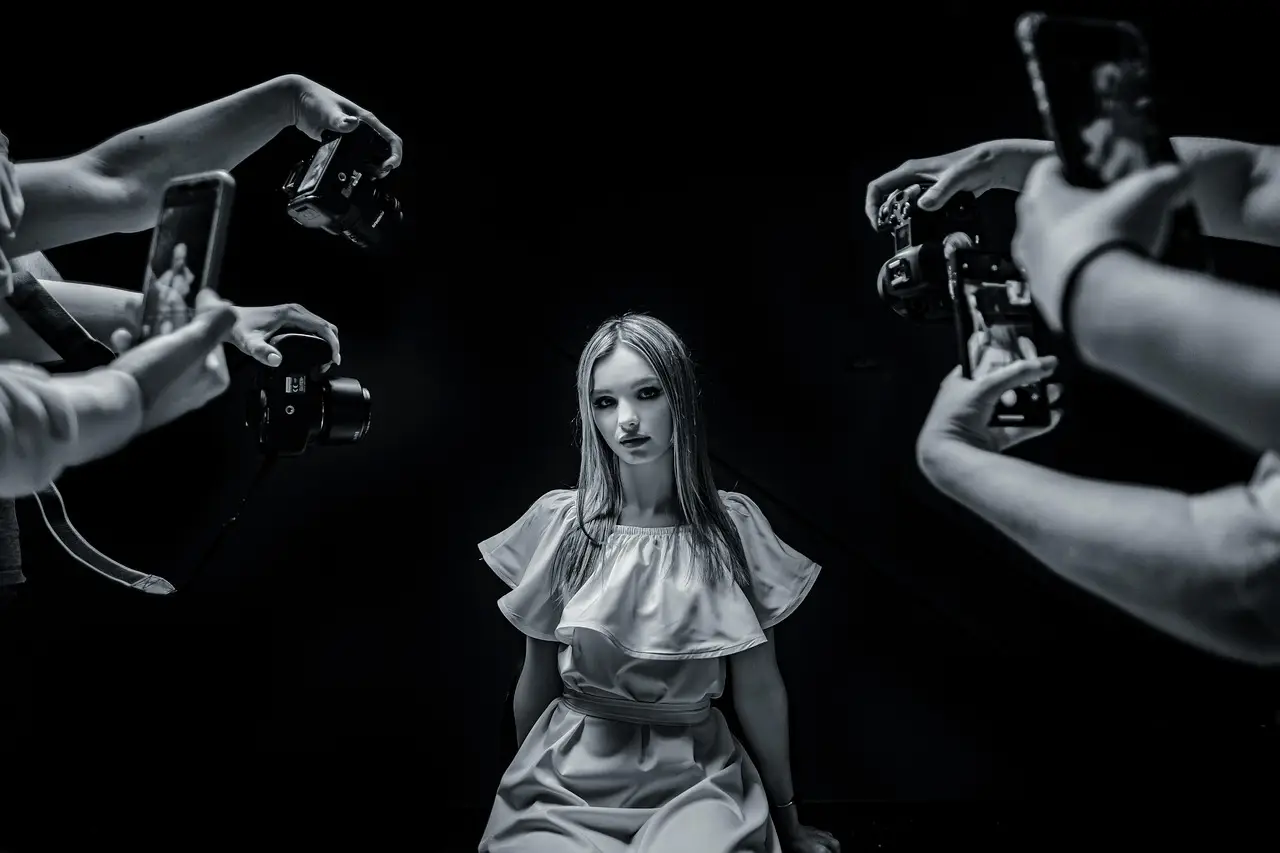
Elena Dudar’s black-and-white portrait practice grew from seven years as an investigative journalist and a year-long, unpaid mentorship with Igor Kostin, known for his Chernobyl photographs.
Kostin met her after lecturing at the university where she studied. She showed him her photographs and asked him to take her on as a student.
His criticism was uncompromising. It left her in tears. The encounter began a year of instruction that she says turned a private interest into a sustained photographic practice.
How did journalism lead to a photographic practice?
Dudar valued her work in investigative journalism, but photography offered a different route for expression. During the 2008–2009 financial crisis, when her finances and psychological well-being were under strain, photography began to acquire the status of a serious personal pursuit.
Kostin taught her without charge. He paired demanding criticism with generosity, and Dudar remembers the combination with gratitude.
Her stated influences now sit between documentary observation and the French school’s interest in movement within a frame. Kostin’s work supplies the documentary reference. The university lecture and ensuing year of teaching supplied its practical context.
The change came through sustained criticism, generous teaching and time.
Why does the portrait begin with a conversation?
Dudar says: “A portrait begins with a conversation.” Before lifting the camera, she asks what has brought a woman to the studio, what the experience means to her, and what she hopes to express.
Her sitters arrive at different moments. A divorce may mark the reason for the session. Medical treatment may have disturbed a woman’s relationship with her appearance. Uncertainty may shape the encounter.
These circumstances help Dudar and her subject define a shared purpose for the photographs, rather than letting the photographer impose a predetermined idea of identity.
The portrait grows from mutual attention and respect. Dudar brings direction. Her subject brings willingness to participate. Their exchange shapes how the person occupies the frame.
Trust is not added to the portrait; it helps produce it.
What does movement reveal that a fixed pose cannot?
Dudar identifies the French school of photography, particularly movement within the frame, as an important influence. During a session she explains, demonstrates and guides. She asks women to move instead of holding a rehearsed pose. She watches the fluidity of the body and the expressions that emerge as each sitter grows comfortable.
Movement loosens habits of self-presentation. It leaves room for gestures that feel less prescribed and more particular to the sitter. Dudar says: “A polished image holds little interest if it reveals nothing of the person photographed.”
Her particular interest in women over 35 rests on the idea that experience becomes visible through expression, posture, presence and the weight of personal history.
Histories, changes, achievements and difficulties affect how a woman inhabits the frame. The camera records these qualities only when the photographer and sitter allow them to emerge.
Movement lets the sitter act and reveals character that a fixed pose can conceal.
Why does Dudar use black and white?
Black and white is central to her visual language. Removing colour directs attention toward expression, gesture, light and form. It simplifies the image, but it does not reduce the work of constructing a frame whose lighting, composition, background and clothing fully support the sitter.
Her styling follows the same discipline. Comfortable, understated clothes let women move and keep the portrait relevant beyond a passing fashion. A simple T-shirt and jeans can supply all the visual structure she needs.
Her account of beauty includes different bodies, ages and appearances. She gives individual differences room and aims for pictures in which each woman can recognise herself.
Aesthetic care serves recognition rather than idealisation. The image should show the person as she is, not replace her with a polished type.
Dudar strips away distraction so expression and bodily character can carry the frame.
How has war reshaped the subjects and the image?
Dudar lives and works in Ukraine during the full-scale war. She describes women who continue to work, create, care for families and make plans amid threats from drones and missiles. Their determination to live fully gives the portraits urgency beyond the private reasons that brought each woman to the studio.
She looks for paired qualities within one person:
- Tenderness beside resolve
- Sensuality beside restraint
- Vulnerability beside strength
Such combinations resist neat portraits. They demand sustained attention to the individual before her and require enough space for contradiction to remain visible.
Her concern carries into the image, where retouching that reshapes faces or bodies contradicts her aim of preserving facial features and each subject’s individual appearance. She preserves skin texture and the features that keep each person recognisable.
Across her practice, conversation, movement and observation converge on a portrait that records how a woman looks, how she carries herself, and how she understands herself.
Her work now points toward preserving individual identity within wartime Ukraine, without making either the person or the conflict into a simple symbol.
Key points
- Dudar worked as an investigative journalist for seven years.
- During the 2008–2009 financial crisis, photography became a more definite direction for Dudar.
- Igor Kostin mentored Dudar for one year without charging a fee.
- Kostin is known for his photographs documenting the Chernobyl disaster.
- Dudar focuses on women over 35 and avoids retouching that reshapes faces or bodies.
Source: Dodho Magazine
Grace Kim
Show full bio
Senior reporter covering companies, deals and strategy in Photography exhibitions, photographers, photo books, festivals and awards at Lens Gazette.