Dougie Wallace Finds Tourists Climbing Inside Scotland's Shortbread Tin
Dougie Wallace's Ma Wee Tin o' Shortbreid documents 60 days and 5,000 miles through the Highlands, where tourists chase the shortbread-tin image and find queues, coaches and camper vans.
Dougie Wallace has spent 60 days and driven 5,000 miles in a camper van photographing the Highlands, and his series has one governing rule: do not make Scotland look like a shortbread tin. The project, titled Ma Wee Tin o' Shortbreid — Scots for "my little tin of shortbread" — records the gap between the Scotland sold to visitors and the Scotland they actually find.
The title began as a private warning. Wallace grew up in a Scottish family that, like many, kept its photographs in an old shortbread tin. The lid always showed the same scene: a castle beside a loch, a stag, a Highland coo, plenty of tartan, and perpetual sunshine. He set out to photograph something other than that lid.
The warning became the title at Eilean Donan Castle. Wallace calls it about as biscuit-tin lid as the Highlands get. There he photographed a Chinese tourist under a small umbrella, remaking the famous view for her own picture. The moment crystallised the project's central observation: visitors arrive with the lid image already in their heads, then work to reproduce it.
What does the camera find at the famous sites?
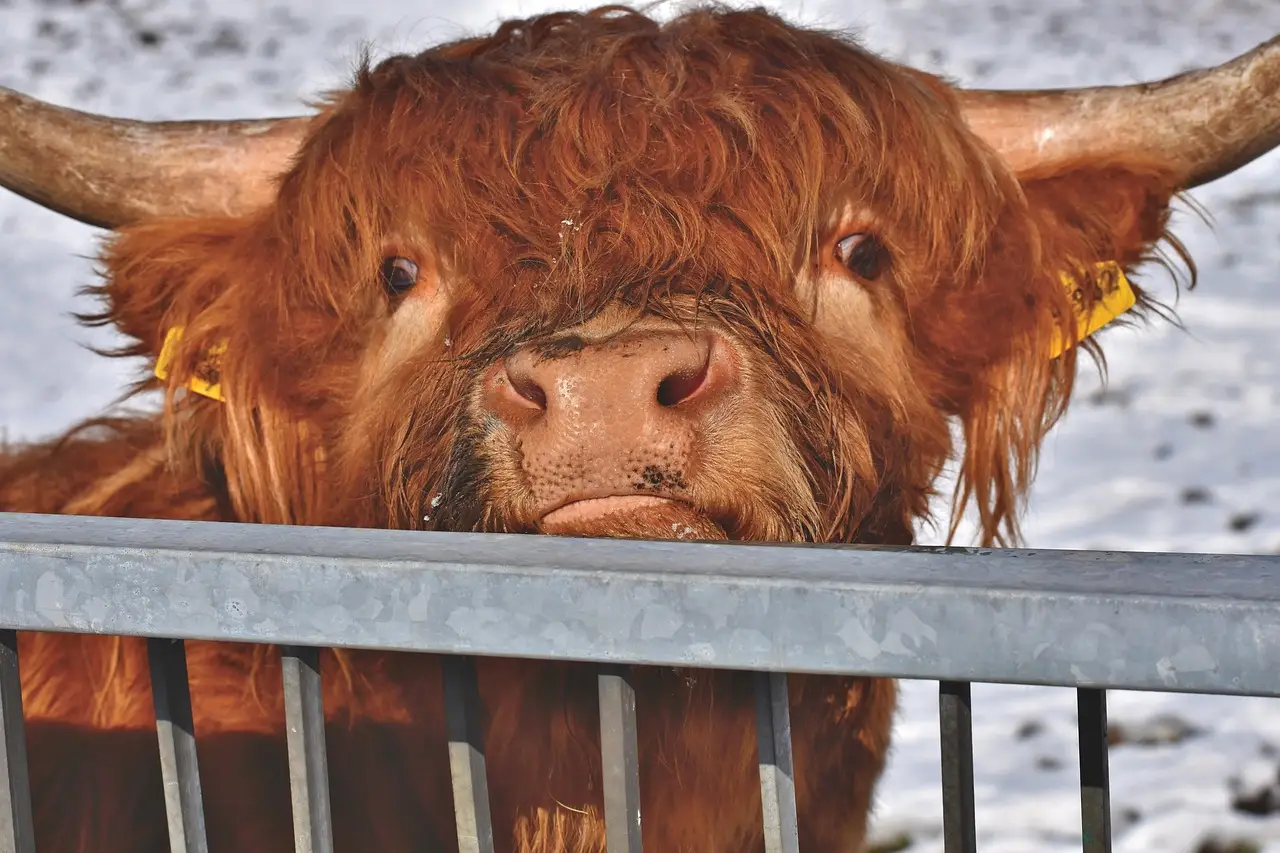
The series documents what the shortbread lid omits. One picture shows a day-tour bus, one of the coaches that leave Edinburgh every morning to "do" the Highlands in a day. Most of that day passes on the bus. Another image frames Glencoe through the window of a Heilan coo — a Highland cow — compressing Scotland's most photographed glen into a view blocked by its most photographed animal.
At the famous locations, Wallace kept noticing how many visitors were Chinese and Indian, from countries Britain once ruled, traded with or fought. They photographed the familiar symbols of old Scotland, from castles to stags. As Wallace puts it: "This time, Scotland was the attraction, and they were the ones behind the camera." The imperial relationship has inverted into a tourist economy, with the former imperial power now the object of the visiting gaze.
Sea eagles supply one of the series' sharpest ironies. The birds were shot to extinction in Britain; the last one was killed in Shetland in 1918. They were brought back from Norway in the 1970s. Now they rank among the island's biggest draws. A bird once shot on sight is now part of the sales pitch. The lid promises wilderness and wildlife; the real version comes with binoculars and a long wait.
Who made the emptiness?
Wallace is explicit that the emptiness tourists come for is manufactured. Highland regiments fought the empire's wars while the glens were cleared for sheep and sporting estates. The view people travel to see was somebody's home. The clearances emptied the landscape that now sells wilderness back to visitors, many from the very countries shaped by that empire.
Even the weather has become merchandise. Cool air and rain now form part of the escape being sold. In what Wallace describes as feeling like London's hottest summer ever, Londoners drove north hunting cold and wet, though he notes a week of horizontal rain may test the sales pitch. The takeaway: in the Highlands, even discomfort is a product with a limit.
How does the NC500 fit in?
The North Coast 500 gives the project its hard numbers. The route was launched in 2015 to sell 516 miles of empty road. It worked, spectacularly. Over July and August one year, about 14,000 motorhomes and nearly 11,000 tents pitched within five miles of Durness, a village where only a few hundred people live.
Wallace has driven the route in both directions and visited Skye five times, often stuck behind a motorhome. He photographs from inside the problem he documents. He uses the same roads, ferries and overnight stops as every other visitor. Passing places become car parks. Viewpoints become campsites. The open road ends at a full layby or a No Motorhomes sign.
Camper van life has its own marketing pitch: freedom, independence, a new view every morning. Wallace's experience punctures it. In practice, the freedom depends on ferry bookings, fresh water, waste points and somewhere you are allowed to stop. In his words: "Freedom, it turns out, needs a booking reference."
What is the cost for residents?
Tourism brings work and money. It also needs workers who can afford to live close enough to keep the place running. Wallace captures the squeeze in a single phrase: between "No Motorhomes" and "No More Homes", it is getting harder for anyone to stay. The industry that sustains the Highlands is pricing out the people who run it.
Reaching the wilderness usually means driving to it, on the same narrow roads used by residents, deliveries, coaches and motorhomes. An empty road makes a good advertisement. Everyone driving down it makes a different picture, and Wallace keeps choosing the second picture.
The project grew out of Weather Permitting, Wallace's earlier photographs of Scotland's ski centres, and it shares that series' interest in weather as an economic actor rather than a backdrop.
Where is the work heading?
Wallace frames the series as a record made under time pressure. The NC500 has been a named tourist route for just over a decade, and he asks directly: what will it look like in another 10 or 20 years? Part of making these photographs, he says, is recording this moment before we find out.
His closing judgement doubles as the series' thesis. "The pictures are about the gap between Scotland as advertised and the place people find," Wallace writes. "I set out not to photograph the shortbread tin. I kept finding people trying to climb inside it." As tourist numbers keep rising and the housing squeeze tightens, that gap — and Wallace's record of it — will only grow more legible with time.
Key points
- Dougie Wallace has spent 60 days and driven 5,000 miles in a camper van on the project so far.
- The North Coast 500 launched in 2015 to market 516 miles of road.
- Around 14,000 motorhomes and nearly 11,000 tents pitched within five miles of Durness over one July–August.
- Sea eagles were shot to extinction in Britain by 1918 in Shetland and reintroduced from Norway in the 1970s.
- The project grew out of Wallace's earlier series Weather Permitting on Scotland's ski centres.
Source: theguardian.com
Grace Kim
Show full bio
Senior reporter covering companies, deals and strategy in Photography exhibitions, photographers, photo books, festivals and awards at Lens Gazette.