Bernie Madoff’s collapse redirected David Yarrow’s photography career
David Yarrow tells Graham Bensinger how Madoff’s collapse ended his finance career, while a $16,000 great white shark photograph—costing $20,000—led him toward fine-art photography.
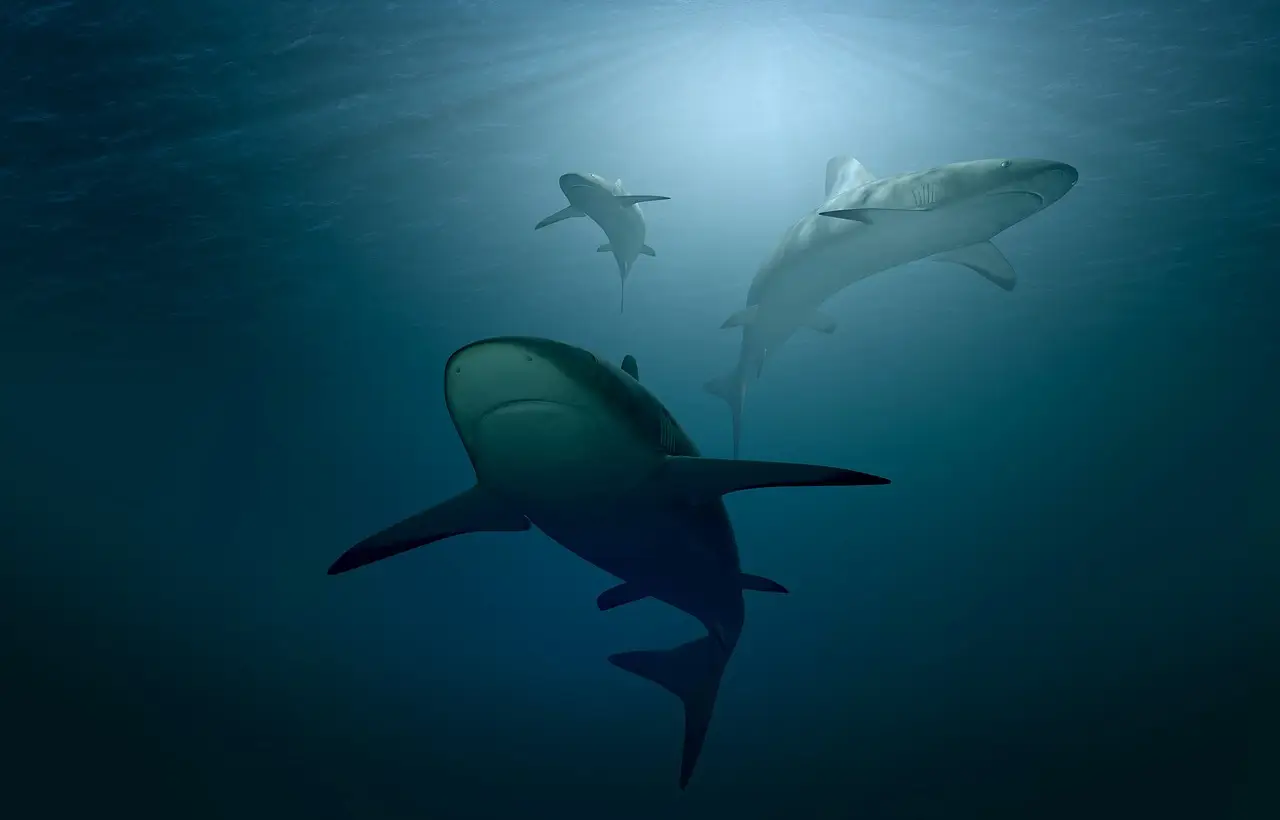
A great white shark breaching off Cape Town brought David Yarrow roughly $16,000 through an agency sale, but the pursuit cost $20,000 and left the Scottish photographer $4,000 out of pocket. The photograph would also supply the commercial clue behind his later fine-art career.
What did the shark photograph teach Yarrow?
The frame showed a great white shark breaching while hunting a seal off Cape Town, South Africa. Yarrow said a picture agency sold it to newspapers and magazines around the world and paid him roughly $16,000. His ledger remained stubbornly unromantic: $20,000 to pursue the image, $16,000 back, $4,000 down.
Then came redemption in the form of a Texas lawyer nicknamed “Jaws,” who wanted to buy the photograph. When Yarrow quoted $6,000, the buyer could hardly believe it was so cheap.
Yarrow said: “That was my a-ha moment, or my road to Damascus moment, or when the penny dropped. That was when [I realized] one person could pay me more for a photograph than all of the newspapers and magazines in the world.”
The irony is precise. Global circulation had left Yarrow $4,000 poorer; a single private offer at less than half the agency return made the economics of direct collecting legible.
The decisive market in this account runs through picture agencies, publishers, newspapers, magazines and, finally, one prospective buyer. A mass image can travel everywhere and still be worth less than its maker’s costs. A singular one may travel through a collector instead.
What did Bernie Madoff change?
In a long conversation with Graham Bensinger, the Scottish fine-art photographer traces an unusually practical route into photography. The profile describes him as one of the most commercially successful photographers working today, best known for dramatic, large-format black-and-white wildlife images before moving into fashion, celebrity portraits and staged scenes.
Yarrow began in sports, covering the 1986 World Cup in Mexico for The Times of London, where he made the well-known photograph of Diego Maradona holding the trophy aloft. His enthusiasm for the assignment curdled after attending the 1988 Calgary Winter Olympics, where too many photographers covered the same events and he found it difficult to stand out.
In his early 20s, Yarrow pivoted from photography into finance. On 9/11, he says, he made bold market moves within minutes of the first plane hitting the tower and netted substantial returns, although the interview provides no figure.
Yarrow says his finance career then fell apart when Bernie Madoff’s massive Ponzi scheme was uncovered and investors pulled all their money from his business.
That interruption sits at the hinge of the story. In Yarrow’s account, his later photographic career occupies a different model from the sports page: the individually authored image, sold as a finished object.
His large-format wildlife work sits beside fashion, celebrity portraits and staged scenes, placing him on the authored-image side of photography’s long-standing distinction between reportage and staged picture-making.
How does the Norwegian portrait extend that method?
PetaPixel separately covered Yarrow’s team portrait of the Norwegian football team as it travelled to the World Cup in the United States last summer. The squad, including star striker Erling Haaland, dressed in Viking gear for the image.
The project turns the machinery of sports photography inside out. Rather than record the Norwegian squad in transit, Yarrow arranged a collective masquerade, placing football identity at the centre of a deliberately staged photograph. The sequence from the 1986 World Cup to the recent Norwegian portrait runs from catching an athlete to constructing an image around a team.
Where does the work go next?
Yarrow’s clearest signal is expansion rather than consolidation. He now applies his staged, authorial approach across wildlife, fashion, celebrity portraits and team imagery, so the commercial test is no longer whether one image can travel; it is whether that wider practice can build the direct relationship with collectors first revealed by the $6,000 quote for the shark photograph.
Key points
- An agency sale of Yarrow’s Cape Town great white shark photograph brought about $16,000, but the $20,000 pursuit left him $4,000 down.
- Yarrow covered the 1986 World Cup in Mexico for The Times of London and photographed Diego Maradona holding the trophy.
- Yarrow became disillusioned with sports photography after the 1988 Calgary Winter Olympics and entered finance in his early 20s.
- After market moves on 9/11, Yarrow saw his finance career collapse when Madoff’s Ponzi scheme was exposed and investors withdrew all their money.
- Yarrow quoted a Texas lawyer nicknamed “Jaws” $6,000 for the shark image, prompting his realization that one buyer could outpay global media sales.
Source: PetaPixel
Olivia Hart
Show full bio
Staff writer covering people, launches and day-to-day practice in Photography exhibitions, photographers, photo books, festivals and awards at Lens Gazette.