Anton Corbijn's Half-Century of Music Images Lands at Fotografiska Tallinn
Fotografiska Tallinn opens a major retrospective of Anton Corbijn, spanning half a century of portraits of Joy Division, U2, Depeche Mode, Bowie and Cobain.
Updated
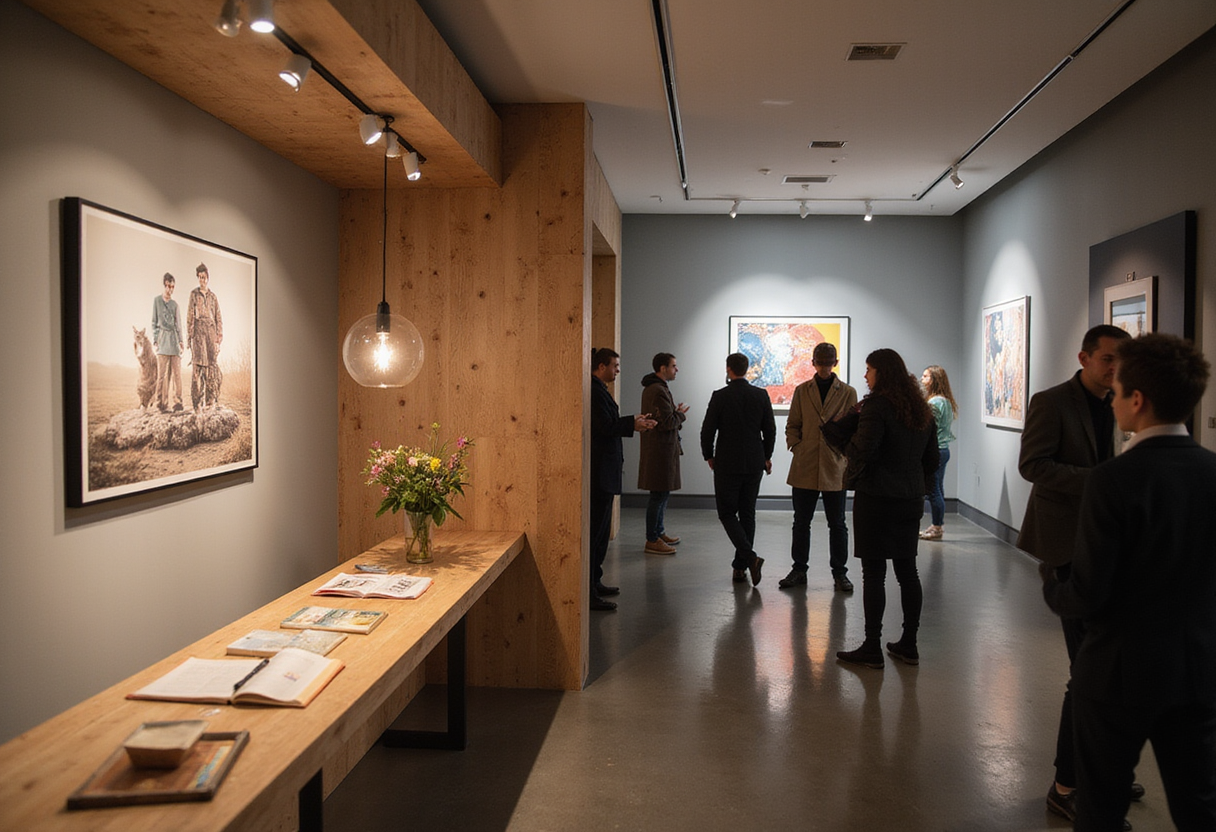
Fotografiska Tallinn has opened a major retrospective devoted to Anton Corbijn, the Dutch photographer whose portraits have shaped the public image of rock and roll for half a century.
Corbijn occupies a peculiar position in the history of music photography. He is not a documentarian who happened to be in the room; he is a co-author of the mythologies surrounding his subjects. His grainy, high-contrast black-and-white images of Joy Division, taken in the late 1970s and around the release of "Closer," helped fix the band's austere northern bleakness in the collective memory. His decades-long relationship with U2 — photographing the band from their early Dublin days through the stadium era — and with Depeche Mode, whose visual identity he effectively built across album covers and tour imagery, make him one of the few photographers whose name carries weight with audiences who cannot name another living photographer.
The Tallinn exhibition spans some fifty years of that work. It arrives at Fotografiska's Estonian outpost, the contemporary photography museum housed in the former Protashev textile factory in the Telliskivi Creative City district, which has positioned itself since opening in 2019 as the Baltic gateway for large-scale international photography exhibitions. Corbijn's retrospective fits that mission precisely: a body of work at once commercial and canonical, rooted in editorial commissions for magazines and record sleeves yet absorbed long ago into the wider history of portraiture.
Corbijn's method has always run against the grain of music-industry gloss. He favors available light, muted color or heavily pushed monochrome, and locations that resist glamour — motorways, empty fields, doorways, industrial edges of cities. His portrait of Brian Eno, his images of Tom Waits, his 1986 picture of David Bowie sketching, his portraits of a young Morrissey and of Nirvana's Kurt Cobain in the early 1990s all share this quality: subjects removed from the stage and placed somewhere plainer, stranger and more exposed. The pictures trade polish for psychological friction, and that trade is precisely why they endured.
Beyond the still camera, Corbijn's career has folded into film. His 2007 debut feature "Control," a monochrome biopic of Joy Division singer Ian Curtis, and "The American" (2010) extended his photographic sensibility into moving images, and his decades of music videos for bands including Nirvana and U2 sit alongside the prints as part of a single, continuous visual project. A retrospective that traces this arc — from small-club commissions in the Netherlands to global album covers to cinema — offers a study in how one photographer's aesthetic hardened into an era's default language of seriousness.
There is a critical question hovering over any Corbijn retrospective, and it is one the Tallinn installation will implicitly answer. His grayscale severity became so influential that it calcified into cliché in lesser hands throughout the 1990s and 2000s. Seen at full scale, across fifty years, the strongest work reasserts itself: the portraits were never really about style, but about a slow, stubborn intimacy with subjects he photographed repeatedly over decades.
For Tallinn, the show continues Fotografiska's run of career-spanning exhibitions by photographers whose work lives at the intersection of commerce and art. For Corbijn, it marks another institutional milestone for an oeuvre that museums once ignored and now compete to show — and with the photographer still active, the retrospective reads less as a full stop than as a mid-flight inventory of a working practice.
Key points
- Fotografiska Tallinn has opened a major retrospective of Anton Corbijn spanning fifty years of music photography.
- Corbijn built the visual identities of U2, Depeche Mode and Joy Division across album covers, tours and editorial work.
- His career extends into film, including the 2007 Ian Curtis biopic "Control" and "The American" (2010).
Source: Google News: photographer retrospective
James Calloway
Show full bio
Market editor covering industry trends and analytics at Lens Gazette.