AnOther Magazine Goes Back to Eggleston's South
AnOther Magazine's new feature, "William Eggleston: More Southern, More Weird," returns to the Memphis photographer whose color work reshaped the medium.
Updated
AnOther Magazine has published a new feature on William Eggleston under the headline "William Eggleston: More Southern, More Weird." The title itself is a small argument. It says the South in his pictures is not a setting but a condition. And it says the weirdness is not decoration. It is the point.
What does the headline actually claim?
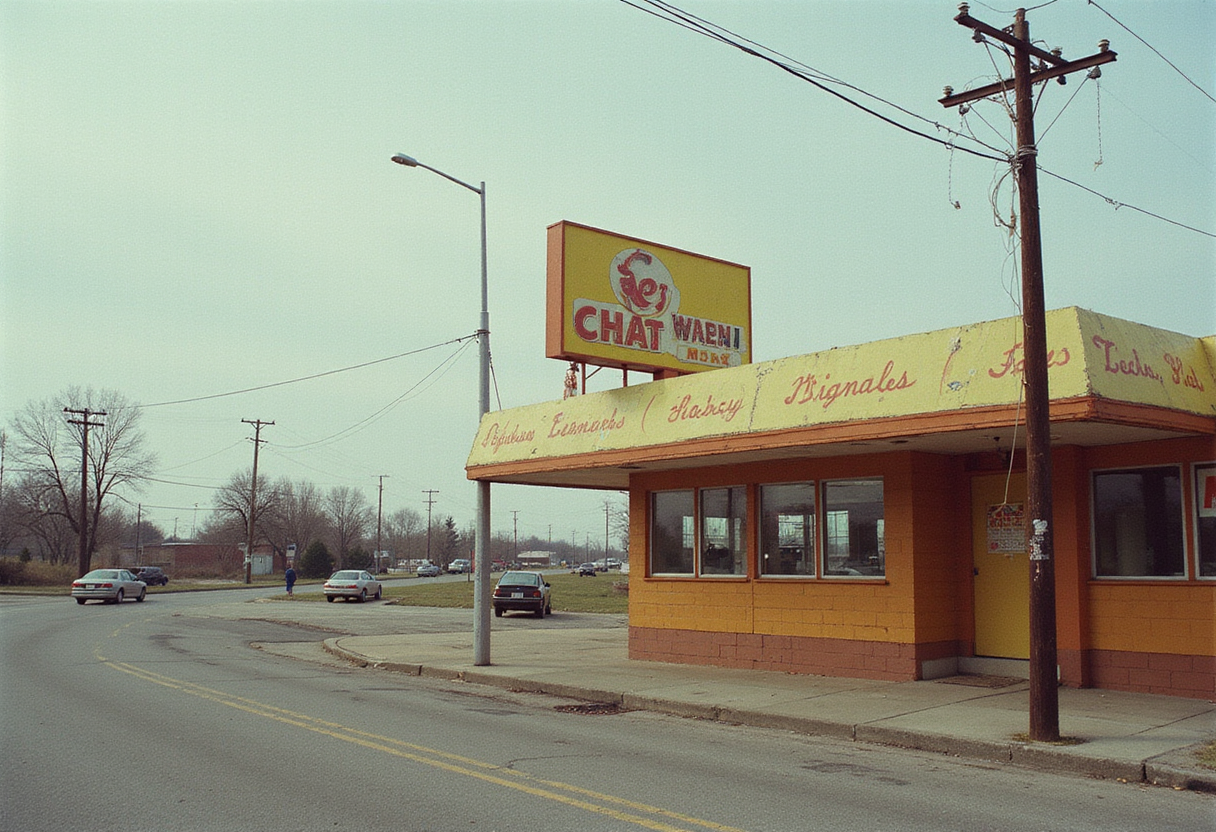
Eggleston photographed Memphis and the Mississippi Delta for decades. He found his material in diners, roadside bars, living rooms and parking lots. The work looked ordinary at first glance. It was not. His framing pushed mundane objects — a tricycle, a ceiling, a freezer full of food — into something close to portraiture. The new AnOther feature leans into that strangeness. The word "weird" signals a reading of the South as a place where surface normalcy keeps folding into the surreal.
The piece joins a long queue of Eggleston coverage. Few living photographers have been written about more. That persistence is itself the story. Takeaway: the feature treats the familiar Eggleston material as still unfinished business.
Why does this photographer keep generating copy?
Eggleston occupies a fixed position in the history of the medium. His 1976 solo exhibition at the Museum of Modern Art in New York, accompanied by the book William Eggleston's Guide, is widely credited as the moment color photography entered the art museum as a serious proposition. Before that, color belonged largely to advertising and family snapshots. John Szarkowski, the curator who championed him, placed dye-transfer prints — a process borrowed from commercial advertising — on museum walls.
The institutional verdict stuck. Eggleston became the reference point every subsequent color photographer had to address. Writers return to him because the work resists a settled interpretation. The pictures are cold and warm at once. They document a region and withhold any statement about it. That ambiguity gives each new feature, including this one, room to work.
Takeaway: Eggleston generates coverage because his pictures still refuse to explain themselves.
What does "more Southern" mean here?
The first half of the headline does separate work. Eggleston's South is specific. It is not the mythic South of plantation romance, and it is not a sociological report either. It is fluorescent-lit, saturated and slightly decayed. The color is not neutral. Reds, greens and sodium-lamp yellows carry emotional weight that black and white could not hold.
AnOther frames the region as inseparable from the photographer's eye. This is the standard, and defensible, reading: Eggleston did not photograph the South so much as invent a version of it that later photographers inherited. "More Southern" suggests a doubling down — an Eggleston stripped of international framing, returned to his home territory.
Takeaway: the feature argues that place and vision are the same thing in this work.
Where does Eggleston coverage go from here?
There is a risk in the endless return. Each new feature must find an angle the last one missed, and "weirdness" is among the most worn. The stronger strands of recent Eggleston writing have looked instead at the prints themselves — the dye-transfer process, the black-and-wing work, the family archive. How this AnOther piece balances freshness against familiarity will decide its value to readers who already know the canon.
What is not in doubt is the appetite. Editors keep commissioning Eggleston stories because audiences keep reading them, and every major retrospective or book reissue restarts the cycle. With interest in the photographer showing no sign of fading, the next institutional statement — a survey, a republication, a fresh curatorial claim — will likely arrive sooner rather than later.
Key points
- AnOther Magazine has published a new feature titled "William Eggleston: More Southern, More Weird."
- Eggleston's landmark MoMA exhibition and book William Eggleston's Guide date to 1976.
- The feature's headline frames the South and its strangeness as the core of his work.
Source: Google News: photography exhibition
Grace Kim
Show full bio
Senior reporter covering companies, deals and strategy in Photography exhibitions, photographers, photo books, festivals and awards at Lens Gazette.