World Press Photo Exhibition Draws Thousands to Ballarat
The touring World Press Photo exhibition has drawn thousands of visitors to Ballarat, cementing the Victorian regional city's standing as a serious destination for photography.
Updated
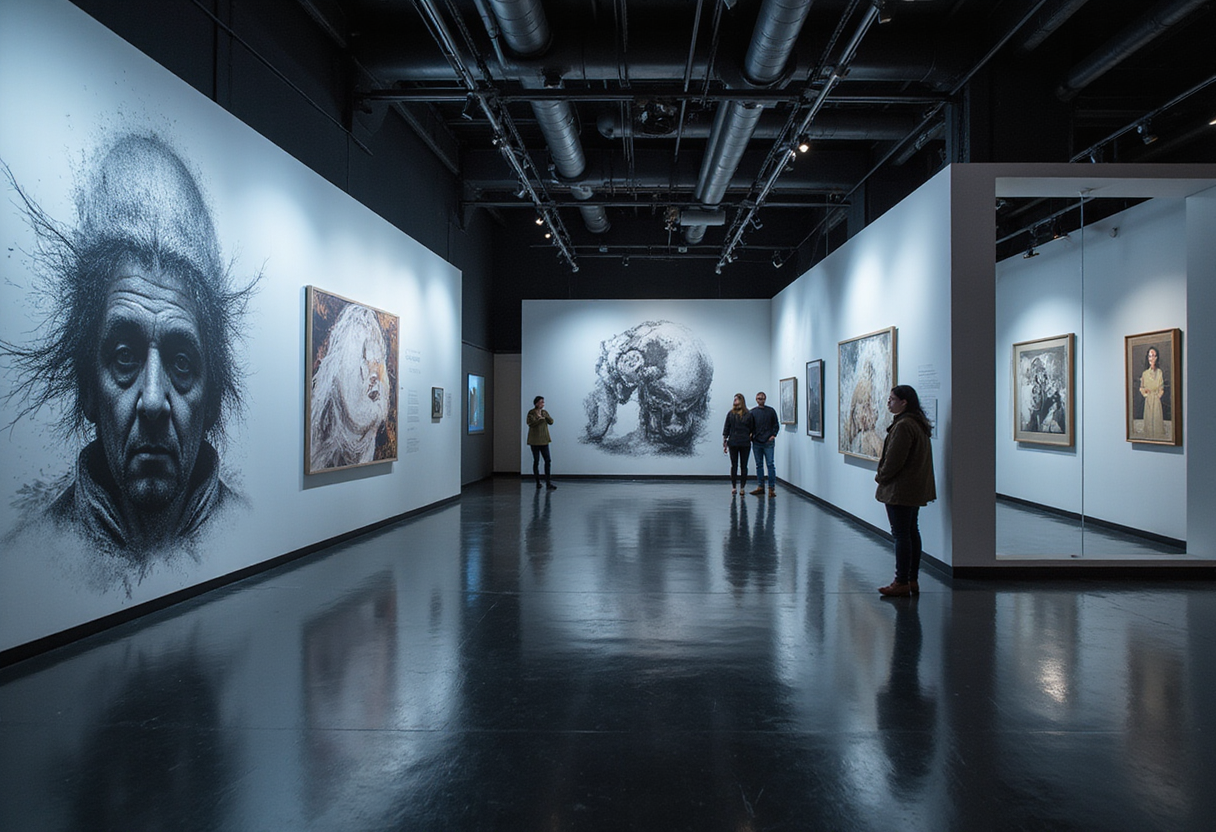
The World Press Photo exhibition has drawn thousands of visitors to Ballarat, the regional Victorian city that has spent the past decade building a reputation as one of Australia's most serious destinations for the photographic image.
The exhibition is the touring edition of the annual World Press Photo contest, the Amsterdam-based institution that since 1955 has functioned as photography's most visible arbiter of what the year's press photography should look like. Each year the winning images — news, documentary, portrait, sport and long-form reportage — travel from the contest's home in the Netherlands to venues across six continents, and Ballarat's leg of that tour has now proven it can pull crowds on a scale most metropolitan galleries would envy.
That a regional city of roughly 100,000 people, an hour and a half west of Melbourne, can fill a venue with press photography speaks to two things at once: the enduring authority of the World Press Photo brand, and Ballarat's own institutional maturation. The city hosts the Ballarat International Foto Biennale, a festival that has grown from a modest regional event into a program capable of securing international partners and significant federal and state funding. A World Press Photo stop fits that trajectory — it is the kind of exhibition that signals a city has arrived on the photographic map.
What draws the crowds is rarely abstraction. The World Press Photo exhibition works because it compresses a year of global events into a walkable sequence of images: conflict, climate disaster, political upheaval, intimate portraiture, the quiet aftermath of catastrophe. Visitors encounter photographs that first circulated in newspapers, agencies and online feeds, stripped of the scrolling context and printed at a scale that demands sustained looking. It is a deliberately sober format — wall text, caption, credit — and its seriousness is precisely the point. In a media environment where images arrive by the hundreds per day, the exhibition insists that a handful of frames deserve minutes rather than seconds.
The thousands of visitors reported in Ballarat also say something about audience appetite outside the major capitals. Photography remains the most accessible of the documentary arts: no specialist knowledge is required to stand in front of a press photograph and feel its argument. Institutions in regional Australia have understood this, and the programming of internationally recognised exhibitions into cities such as Ballarat reflects a broader decentralisation of cultural infrastructure that has accelerated since the pandemic.
For the photographers themselves, the touring exhibition extends the life of work that might otherwise vanish into a news cycle lasting days. A contest win at World Press Photo remains one of the profession's most consequential outcomes — it brings commissioning attention, publication interest and, for many photojournalists working in conflict zones or under authoritarian pressure, a measure of protection through visibility. The Ballarat audience, far from the places where the images were made, becomes part of that visibility.
The challenge, as ever with the World Press Photo format, is the tension between tribute and spectacle. Gathering a year's most dramatic news imagery under one roof risks flattening the difference between documentation and drama, and critics of the contest have long debated whether its prize structure rewards impact over nuance. The exhibition's strength is that it lets viewers make that judgment themselves, image by image, rather than through a feed.
With attendance in the thousands and the World Press Photo tour continuing its global circuit, Ballarat's claim to a place on the international photography calendar looks set to strengthen when the city's next festival programming takes the baton.
Key points
- The World Press Photo exhibition has attracted thousands of visitors in Ballarat, Victoria.
- World Press Photo is an Amsterdam-based contest and touring exhibition founded in 1955.
- Ballarat has developed as a photography destination, hosting the Ballarat International Foto Biennale.
Source: Google News: World Press Photo
Grace Kim
Show full bio
Senior reporter covering consumer brands and retail at Lens Gazette.