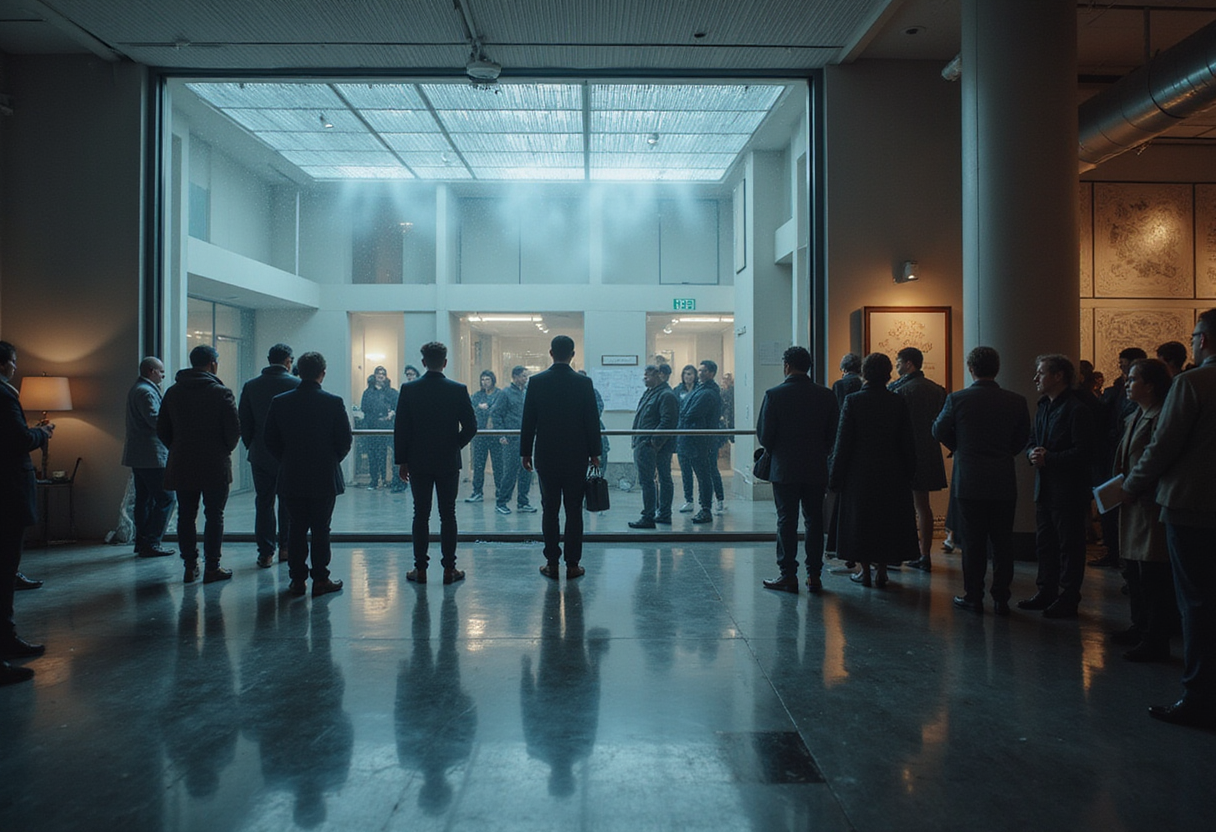
World Press Photo 2025 Winners: The Images That Made the Cut
The Guardian publishes the winning images from World Press Photo 2025, the Amsterdam foundation's annual selection now confirmed ahead of its global exhibition tour.
Updated
The Guardian has published its gallery of the winning images from the World Press Photo 2025 contest, the Amsterdam-based foundation's annual selection of the year's most consequential press photography. The gallery arrives ahead of the travelling exhibition programme that traditionally opens at De Nieuwe Kerk in Amsterdam each spring before touring venues worldwide.
For practitioners, the annual announcement functions as more than a roundup. It sets the terms of debate for the coming year: which stories gained institutional traction, which visual strategies persuaded the juries, and which regions of production the foundation chose to elevate.
What can readers see in the Guardian's gallery?
The Guardian's selection presents the winning photographs across the contest's category structure, which since the 2022 reforms has organised entries by region — Africa, Asia, Europe, North and Central America, South and Southeast Asia and Oceania, South America, and West and Central Asia and North Africa — before naming global winners.
The regional model changed the arithmetic of recognition. Where a single global jury once dominated, six regional juries now shortlist work first, and the global winners emerge from that pool. For photographers working far from the Western wire agencies, that restructuring measurably widened the list of names reaching the final stage.
The contest awards four global categories: Photo of the Year, Story of the Year, Long-Term Project of the Year, and Open Format of the Year. Each carries a cash prize, and the winners enter the foundation's exhibition tour, which in recent years has reached millions of visitors across dozens of cities.
Why does this annual selection matter for working photographers?
The World Press Photo contest remains the field's most visible institutional gatekeeper. A win translates directly into exhibition bookings, editorial commissions and agency contracts, and the foundation's independent verification process — which scrutinises raw files and caption accuracy before results are confirmed — has become a de facto standard for authentication in the discipline.
That verification regime hardened after successive disqualifications in earlier contest years, and it now shapes how entrants prepare files. Photographers shooting for the contest must retain unedited captures and consistent metadata, because the foundation's forensic team examines both for shortlisted entries.
The Guardian's gallery therefore doubles as a working document. Editors and picture researchers will study it for the visual languages that carried this year: the framing choices, the sequencing within story entries, and the balance between witness and authorship that the juries rewarded.
How does the contest frame its purpose?
The foundation positions the awards as a record of the year in world events, selecting images that demonstrate accuracy, fairness and visual strength under the contest's code of ethics. The winning work typically spans conflict coverage, environmental reporting, documentary projects built over years, and experimental open-format entries that test where press photography ends and visual storytelling begins.
The Long-Term Project category, introduced alongside the 2022 reforms, deserves particular attention from practitioners. It rewards sustained engagement over a single news cycle, and its winners have increasingly shaped the market for multi-year documentary funding — from grant committees to book publishers looking for bodies of work with institutional validation attached.
What comes next for the winning work?
The global winners will anchor the 2025 exhibition tour, opening in Amsterdam before travelling to international venues, and the foundation will publish the full catalogue alongside its educational programme. For photographers planning entries to the 2026 contest, the 2025 results — now visible in the Guardian's gallery — mark the current benchmark the next cycle of work will have to meet.
Key points
- The Guardian has published its gallery of World Press Photo 2025 winning images.
- The contest awards four global categories, including Photo of the Year and Story of the Year.
- The regional jury model, introduced in 2022, organises entries across six world regions.
- The winning exhibition traditionally opens at De Nieuwe Kerk in Amsterdam before touring worldwide.
Source: Google News: World Press Photo
James Calloway
Show full bio
Market editor covering people, launches and day-to-day practice in Photography exhibitions, photographers, photo books, festivals and awards at Lens Gazette.