Twenty-Five Years on the Cliff Edge: Red Bull Rampage Honors Its Photographers
A one-day NYC exhibition pairs Red Bull's photography team with Christian Pondella, who has shot all 25 editions of the Utah freeride event — over 50,000 images since 2001.
Updated
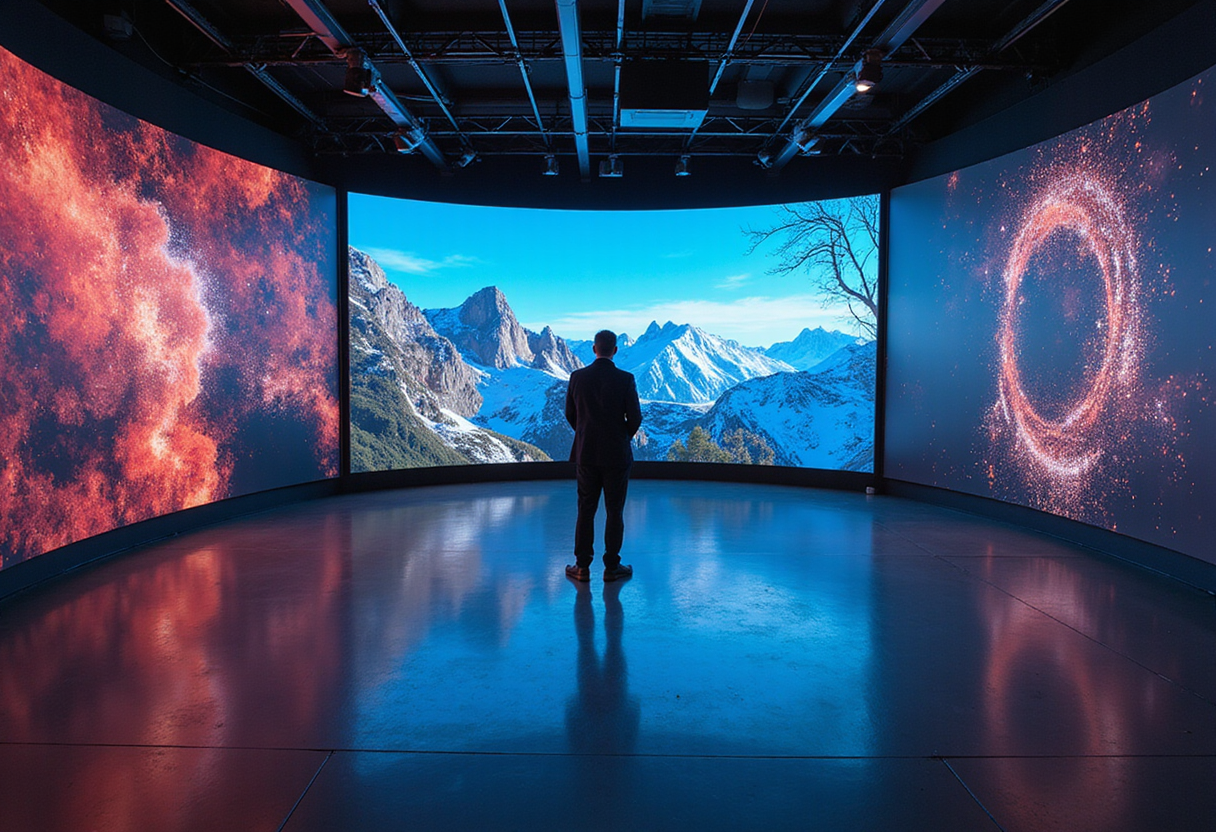
A one-day exhibition in New York City has turned the lens back on the photographers of Red Bull Rampage, pairing iconic imagery from Red Bull's photography team with the work of adventure photographer Christian Pondella, who has shot every edition of the Utah freeride event since it began in 2001.
The Red Bull Rampage 25th Anniversary Photo Gallery is, at its core, a study in access and risk. For a quarter of a century, Rampage has brought the world's best freeride mountain bikers to the towering cliffs of southwest Utah, where they ride lines that look almost impossible even from a distance. A second group navigates those same cliffs carrying cameras instead of bikes, documenting every jump, drop, and near miss.
The photographers' working conditions mirror the athletes'. They climb and position themselves on steep, exposed sections of the terrain while hauling camera equipment, searching for perspectives that communicate how dramatic the landscape really is. From those perches, they must anticipate where a rider will travel through the frame, hold focus and composition, and be ready for a single opportunity. The finished photographs often make the action look effortless. Behind each image sits considerable planning, climbing, positioning, and trust among athletes, photographers, and event crew.
Pondella occupies a singular position in this world. An accomplished climber, skier, cyclist, and adventure athlete himself, he understands the terrain well enough to put himself where the photograph needs to happen — which can mean navigating the same steep, exposed landscape as the riders, while carrying significantly more equipment and constantly calculating where the next picture will occur.
His archive now holds more than 50,000 Rampage images, spanning generations of riders and the event's most defining moments. Over 25 years he has watched Rampage grow from its raw beginnings in the Utah desert into a highly produced global competition, while camera technology evolved alongside the athletes and their bikes. His editorial and commercial reach extends well beyond mountain biking: Pondella has photographed skiing, climbing, motocross, and base jumping for National Geographic, Sports Illustrated, Outside, and Men's Journal, and has shot campaigns for Red Bull, Patagonia, Oakley, and Yeti.
Yet when asked about his favorite part of photographing the event, Pondella did not point to the cameras, the technology, or the increasingly elaborate course features. "Yes, it's definitely a team, from the amazing athletes to the crew and then photographers working together to put it all together," he said. "Every year that I go back it's like I'm seeing family again."
Paris Gore, another photographer featured in the exhibition, gave a strikingly similar answer when asked what makes photographing Rampage special at the event's 25-year mark. "When I think about Red Bull Rampage it's definitely the people that bring it all together for me. I look forward to it every year."
The answers are revealing for an event so visually defined by enormous jumps, cliffs, and technical riding. For the photographers who return annually, Rampage is not only about documenting increasingly impressive athletic feats. It is about the community that has grown around the event — a camaraderie visible in the working method itself. Every dramatic photograph represents a collaboration, whether an athlete trusts a photographer to stand close to a line, a crew member helps establish a safe working area, or photographers divide different angles of the same run among themselves.
The exhibition frames 25 years of Rampage as a history of photographic adaptation as much as athletic progression. A successful Rampage photograph must communicate scale, speed, terrain, and athleticism in a single frame — close enough to make the cliffs feel enormous, yet composed so the rider has somewhere to go within the picture. The best images make viewers feel they are standing on the mountain with the photographer.
That perspective comes at a cost. Pondella's frames make the point across the decades: Cam Zink mid-backflip off a wooden ramp at the 2013 finals in Virgin, Utah, on 13 October; Kyle Strait's no-handed jump above a rocky canyon in 2004; a rider descending a raw cliff face beneath a Red Bull arch in 2002; a 2023 composite sequence of Bienvenido Aguado Alba flipping over a desert canyon on 13 October; and Chelsea Kimball riding the women's final in St. George, Utah, on 10 October 2024. The athletes are not the only ones putting themselves in difficult positions to create the spectacle.
The anniversary continues in the desert this October, when Rampage returns to southwest Utah in a two-day format: the women's competition on Thursday, 8 October, followed by the men's on Saturday, 10 October, both broadcast from 10 a.m. MT on Red Bull TV and the Red Bull Bike YouTube channel. As the next generation of images pulls viewers into the action, the exhibition argues, another story unfolds behind the camera — a photographer on the same mountain, negotiating the same terrain, waiting for the one frame that translates the experience for everyone watching from somewhere else.
Key points
- Christian Pondella has photographed every Red Bull Rampage since 2001, building an archive of more than 50,000 images from the event.
- The Red Bull Rampage 25th Anniversary Photo Gallery was a one-day exhibition in New York City featuring Red Bull's photography team alongside Pondella and Paris Gore.
- The 2026 Rampage returns to southwest Utah in a two-day format: women's competition on 8 October and men's on 10 October, both from 10 a.m. MT on Red Bull TV and YouTube.
Original: petapixel.com
James Calloway
Show full bio
Market editor covering industry trends and analytics at Lens Gazette.