Tate Britain's First 1990s Show Maps Where Art Met Fashion
Tate Britain stages its first show on 1990s British art and fashion photography, curated by Edward Enninful, from 8 October 2026 to 14 February 2027.
Updated
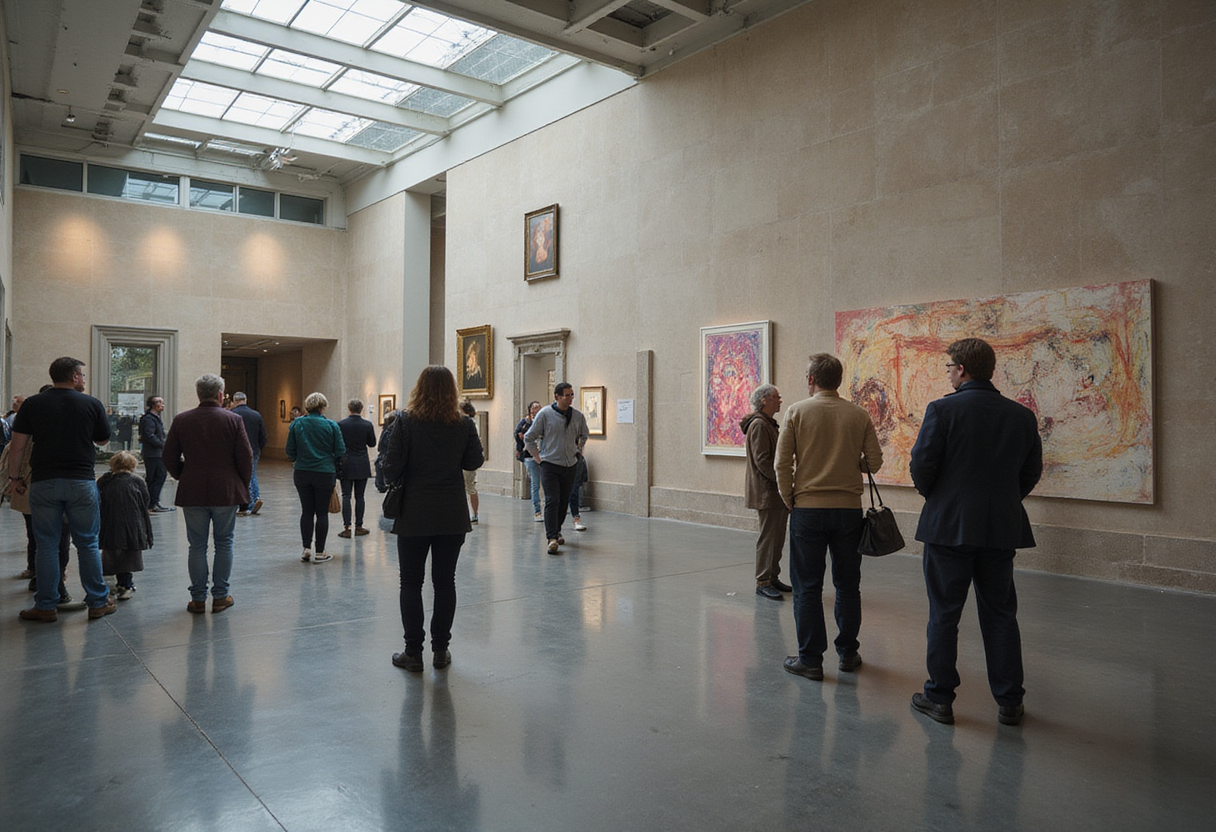
Tate Britain opens its first exhibition devoted to 1990s British art and fashion photography on 8 October 2026, running until 14 February 2027. Curated by Edward Enninful with texts by Enninful and Tate Britain director Alex Farquharson, The 90s: Art and Fashion does not attempt a definitive survey of the decade. Instead it maps one persistent phenomenon: the point at which art and fashion photography fused in Britain — a entanglement the show argues continues to this day.
The photographers on view range from Wolfgang Tillmans and Juergen Teller to Corinne Day, Ellen von Unwerth, Elaine Constantine, Eddie Otchere, Normski, David Swindells, Sophy Rickett, Eileen Perrier, Mark Mattock and Koto Bolofo.
What was the last offline decade?
The exhibition frames the 1990s as the final analogue decade. Ask Gen Z what draws them to the era, the curators note, and the answer is typically "no smartphones". The internet existed but remained slow and niche. Culture was consumed in physical, social form, and people could enjoy — or embarrass — themselves without the awareness that images might circulate online indefinitely.
Jarvis Cocker recalls the period directly: "It felt like something was happening. Something good. The weirdos were taking over. We danced at Smashing. We drank in Camden. Surely, if we all grabbed hold and worked together, we could turn the '9' in 90s upside down, make it a '6' — make the 60s happen all over again. We tried. We really did."
Which images anchor the show?
The works span club culture, documentary realism and fashion portraiture:
- Eddie Otchere's Metalheadz Sunday Sessions at the Blue Note, Hoxton Square, 1995–1996, catching ravers pressed together mid-laugh.
- David Swindells's Bob's Full House at Bagley's Studios, Kings Cross, 1991.
- Elaine Constantine's Northampton, 1997 — figures leaning against a car at night.
- Corinne Day's Rosemary Ferguson, shot for 'England's Dreaming' in The Face, August 1993.
- Juergen Teller's Domenique, London, 29 September 1998 and Young Pink Kate, London, 1998.
- Ellen von Unwerth's 1994 portrait of Naomi Campbell for the Babywoman album cover.
- Sophy Rickett's Vauxhall Bridge, from the series Pissing Women, 1995.
- Eileen Perrier's Untitled, Afro Hair and Beauty Show, 1998.
- Mark Mattock's Alek Wek, 1996, and Koto Bolofo's Chopper Mark II, 2001.
Day, Teller and Nigel Shafran emerge in the show's account as key figures of a new realism: narratives of life and friendship shot with natural lighting and minimal retouching.
How did the magazines shape it?
Advances in publishing and image circulation let fashion and art move at new speed, and London's tight social geography accelerated the exchange. i-D and The Face absorbed the decade's raw energy, with editors, stylists and art directors exploring youth, identity and style in domestic and urban settings.
Matthew Collin, who worked at i-D, remembers: "People turned up in the office with a thrilling portfolio or a piece of reportage from uncharted cultural territory: if it was fresh, it went on the pages. But it wouldn't have been possible without the sheer vitality of British youth culture at the time."
Stella McCartney recalls London as "endless fun and that felt electric", recalling her degree show cast of friends — Kate Moss and Naomi Campbell — who walked "not only for me, but to support British fashion".
Whose decade gets shown?
The exhibition deliberately widens the frame beyond the figures who publicly defined the 90s. Its curatorial statement recognises that the decade's energy was distributed across communities, disciplines and geographies not always equally represented — citing Normski, who found his people through London's hip-hop, house and jungle scenes and "Act local, think global" as his worldview.
The show closes on an explicitly unresolved note. Many of the questions that defined the 1990s — visibility, access, power — remain open, and the exhibition presents the decade not as a closed historical moment but as an ongoing point of reference: a legacy of culture's capacity to challenge, disrupt and reimagine, with Tate Britain positioning the art-fashion relationship it documents as an evolving story rather than a fixed narrative.
Key points
- The 90s: Art and Fashion runs at Tate Britain, London, from 8 October 2026 to 14 February 2027.
- The exhibition is Tate Britain's first looking back at 1990s British art and fashion photography.
- Edward Enninful curated the show, with texts by Enninful and Alex Farquharson.
- Photographers include Wolfgang Tillmans, Juergen Teller, Corinne Day, Ellen von Unwerth and Eddie Otchere.
- Works span 1991 to 2001, from Bagley's Studios club scenes to Koto Bolofo's Chopper Mark II.
Original: i.guim.co.uk
James Calloway
Show full bio
Market editor covering industry trends and analytics at Lens Gazette.