Taryn Simon Turns One FBI Agent's Life into a Portrait of America at the Guggenheim
Taryn Simon's Guggenheim show traces one unnamed FBI agent through 42 chapters and some 1,000 photographs, from Marion Barry to January 6, through March 14, 2027.
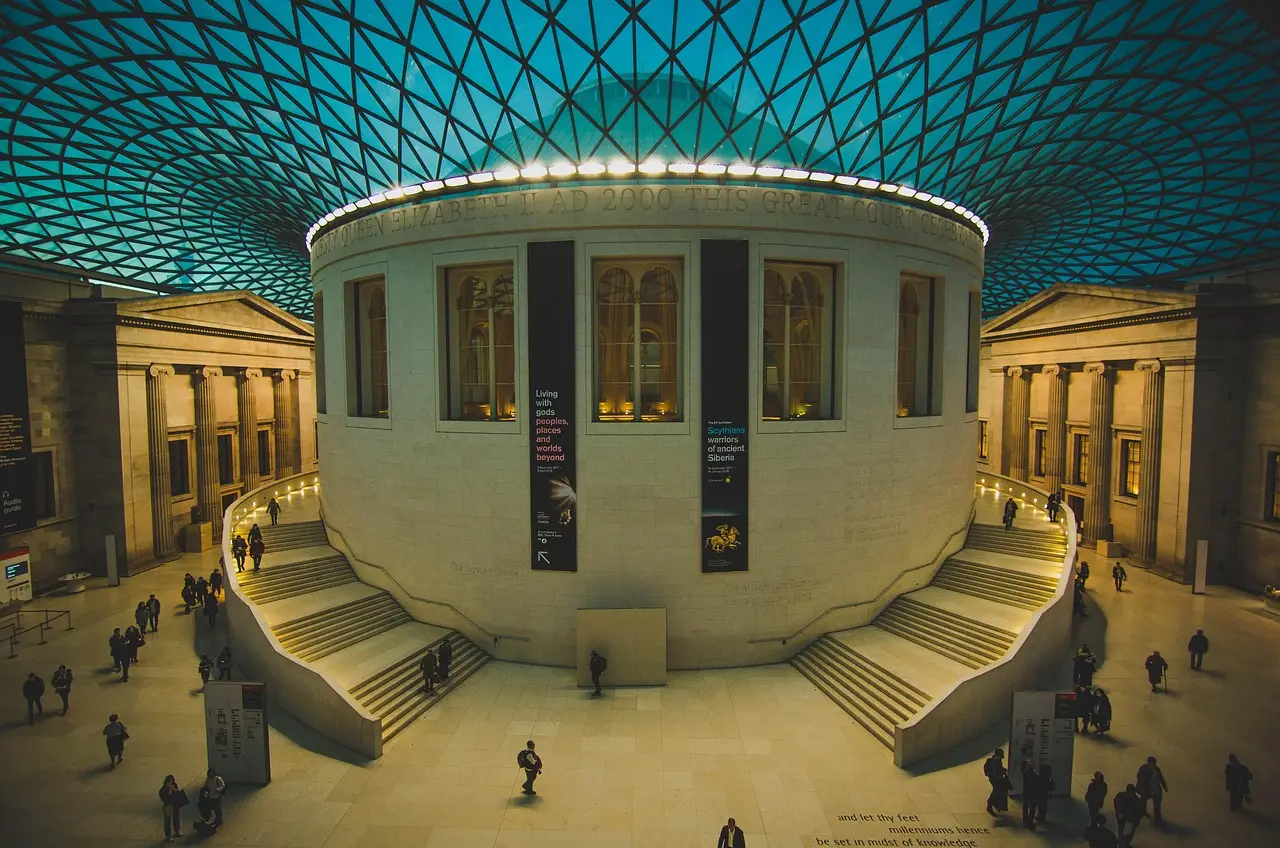
Taryn Simon's exhibition Father Country I Do Love You opened at the Solomon R. Guggenheim Museum in New York on September 18, 2026 and runs through March 14, 2027. The show spans forty-two "chapters" built around roughly one thousand photographs, plus videos, objects, sculptures, and texts. Its main character is an unnamed FBI agent Simon met a decade ago, whose life touches a sprawling network of American political events. His story runs from the sting that arrested Washington, DC mayor Marion Barry, to the bombing of the American Embassy in Nairobi, to Vince Foster's 1993 suicide, to January 6. The show opens and closes with Simon's father, a former State Department employee who later ran Broadway Arcade in Times Square. The takeaway: one obscure life, examined in fine detail, becomes a map of the nation.
Simon discussed the work in conversation with photography critic Jean Dykstra, published in The Brooklyn Rail in November 2026. The project took ten years. It is her first without her father as collaborator, and his absence, she said, "started invading from all sides." Her father now has Alzheimer's. He once said America was the greatest story on earth if you could find someone to tell it. He cannot tell it. The agent can.
How did Simon find the agent?
The mechanism is almost absurdly simple. Simon found his name on an evidence receipt. Then she called him. They met at a Mexican restaurant beside a highway. "He just started telling me all these stories, and it all kind of felt like fiction," Simon said. One man had touched nearly every critical point of recent American history. Simon called it "an incredibly intense constellation of almost everything," yet also almost ordinary.
Simon traced his timeline. She also traveled to Russia, researching a translator who stood between world leaders at the end of the Cold War. The middleman, she argued, holds enormous influence while remaining invisible, someone without full access to the bigger picture who still shapes it.
What does the exhibition say about photography?
Photography appears in many roles throughout the show. The agent photographs rainbows in his off-hours. Simon read the rainbow as a chase after something unpredictable, a moment when "the sky cracked open and some power above anointed you." A WSJ Magazine in the exhibition carries Tom Brady's smiling face on the cover. Inside sit Simon's photographs of the reconstructed wreckage of TWA Flight 800, which crashed in 1996 killing all aboard. The agent investigated that crash. The plane had also carried artificial corneas, and investigators questioned whether something transported with them caused the crash. Simon connected the cornea, which bends light to allow sight, to the question of seeing in a constructed way.
One chain of images runs from 9/11 to the Knights Templar. On September 11, a woman detouring from Martha's Vineyard photographed the Pentagon crash site. The agent seized her film, recognizing the photograph's power, and kept it in his bedside table. Simon developed that roll twenty years later. She found the woman, who turned out to be Dame Johnnie Melinda Walker of the Sovereign Military Order of the Temple of Jerusalem. The woman showed Simon the camera, still jammed with another roll. Simon developed it and found photographs of a Knights Templar ceremony in white and red robes. The photograph, Simon said, "can rest, it can be dormant, it can sleep, it can hide, and then it comes up."
Why do faces turn away?
Many portraits in the show hide their subjects. Faces turn away. Dykstra noted these images fail as identification. Simon called them surrogates, standing in for the many stories behind and alongside each story. She linked them to her father's fevered speech at the show's end, addressing another earth: "We can't separate it. There has to be two. There's one. There's two. Earth two. Earth two." For Simon, a matrix of time collapses and compresses. The takeaway: the photograph both fills gaps in memory and keeps shifting the record.
What about memory loss and erasure?
Memory gaps recur throughout. The agent has them. So does a group of people with transient global amnesia, who lose their names, jobs, nation, and time itself. And so does Jake Joy, a public affairs officer with DLA Disposition Services, who suffered a four-hour memory gap at Fort Meade, Maryland, during which he threatened Simon's crew and injured himself. Simon described the photograph as "a really good executor of backfilling," filling gaps others control. Dykstra read these episodes against current political erasure. Simon said you can cut a day, a year, or a life out of the story and stitch time back together. Applied to a nation, she said, forgetting creates enormous vulnerability.
How does the show handle the agent's moral record?
The agent's story includes David S., a man flipped into becoming an informant, and a canine handler convicted of releasing her dog without legal justification on an undocumented immigrant, who was wounded. The agent's sympathies lay with the handler. Simon said she was committed to showing complications "embracing vulnerability without judgment," and that restraint in those chapters was the hardest and most necessary thing.
Elsewhere, the exhibition confronts gun culture. The agent first fired a rifle at a YMCA summer camp. In one video, his voice morphs between his adult self, slightly manipulated by AI, and his boyhood self, narrating FBI headquarters gun demonstrations. In retirement, he moved into school safety, protecting children from themselves. A photograph shows his Superman bathrobe. The text calls school shooters kryptonite, homegrown killers. Simon likened it to an autoimmune disease.
What closes the show?
At the top of the rotunda, visitors crank a lever to release a painted ball into a teak ball run that spirals down the ramp's inner edge. The balls match the colors of the forty-two chapters. They pass every story. Simon built it as a monument to her father, who spent ten years of her life at the center of the work. Visitors set the ball in motion and never see where it lands. She said she wants to sleep alongside the work rather than walk away from it, and the exhibition's long run through March 2027 gives New York ample time to trace its descent.
Key points
- Father Country I Do Love You runs at the Guggenheim Museum, New York, September 18, 2026–March 14, 2027.
- The exhibition comprises 42 chapters and roughly 1,000 photographs plus video, sculpture, objects, and texts.
- Simon found the FBI agent's name on an evidence receipt and developed a roll of film he seized at the Pentagon on 9/11 twenty years later.
- The project took ten years, beginning around 2016.
- The show opens and closes with Simon's father, who has Alzheimer's.
Source: Google News: photography exhibition
Grace Kim
Show full bio
Senior reporter covering companies, deals and strategy in Photography exhibitions, photographers, photo books, festivals and awards at Lens Gazette.