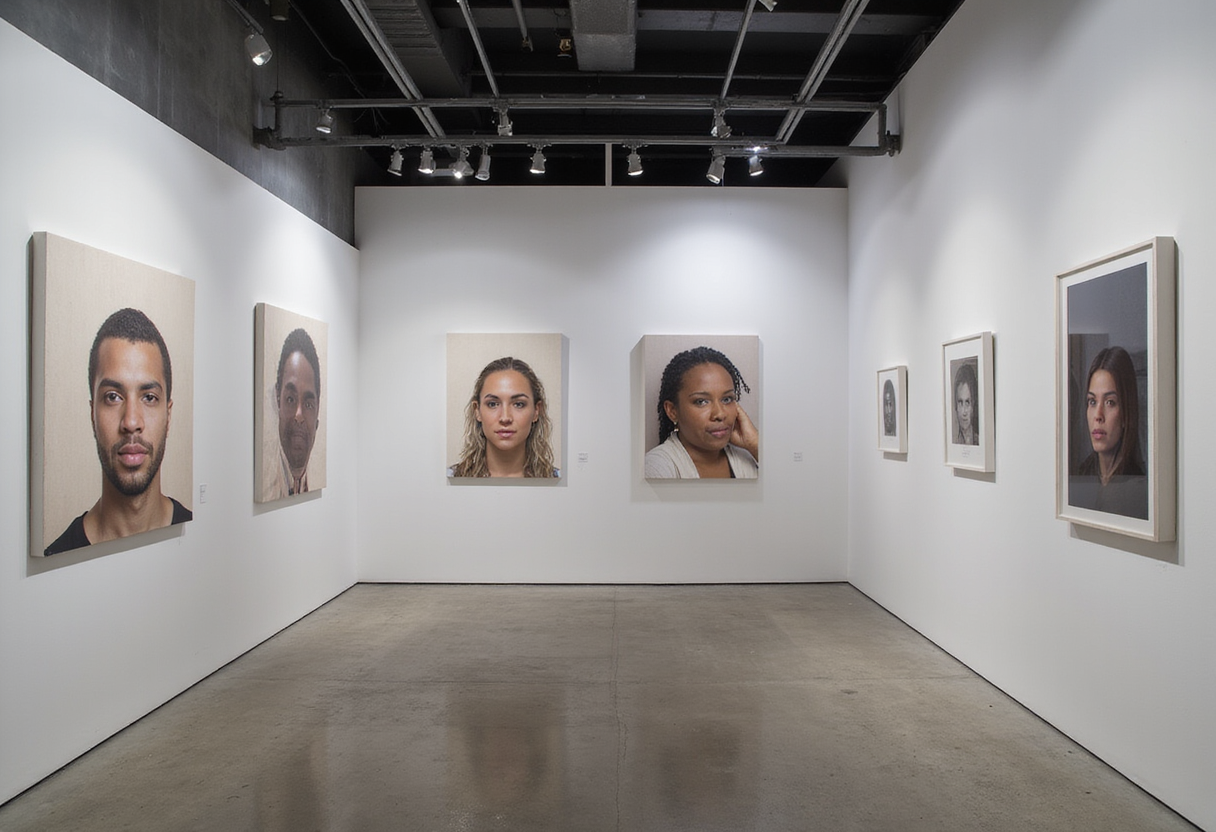
NSW exhibition marks 25 years since Afghanistan deployments
A NSW Government photography exhibition marking 25 years since Australian deployments to Afghanistan pairs commissioned portraits with veteran testimony, though the release names no curator, venue, or photographer.
Updated
A photography exhibition marking 25 years of Australian deployments to Afghanistan has opened under New South Wales government auspices. The show pairs commissioned portraits with first-person veteran testimony, according to a brief online release issued by the NSW Government.
The framing reflects a deliberate institutional reckoning rather than a one-off anniversary gesture. Australia's combat mission in Afghanistan began in late 2001 and concluded with the final withdrawal of personnel in 2021.
A 25-year retrospective therefore addresses a generation of veterans now approaching middle age, many living with documented post-service effects that quietly reshape working and family life. Government sponsorship signals recognition of long-term outcomes rather than ceremonial commemoration alone.
What does the release confirm?
The text names an exhibition of photographs and accompanying veteran stories. It does not name a curator, a hosting venue, a lead photographer, or an opening date. The format reads as documentary portraiture with paired oral history, with each photograph linked to a written account from the subject.
The available text is short. Readers planning to attend will wait for further official announcements.
That thin announcement has clear institutional precedent. Government photography projects on military service have grown across Australia since the early 2000s. They typically pair commissioned image-makers with serving members, veterans, and their immediate families.
Such pairings aim to humanise individuals who would otherwise remain statistical figures in public memory. The NSW project, on present evidence, follows that template, with portraiture and first-person voice at its core.
Who carries the weight of the work?
The veterans themselves will determine how the exhibition lands with viewers. Twenty-five years of distance between event and representation lets narrative move from immediate dispatch into considered testimony that retains the urgency of lived memory.
That shift in register is the project's principal potential contribution. Photography centred on named individuals, rather than on uniformed service categories, alters how civilian audiences receive difficult subjects.
The choice of subject list, when published, will become the strongest signal of editorial intent.
What are the editorial limits?
Government-backed portraiture carries structural limits that warrant critical attention. Curators working under ministerial briefs tend to foreground themes of duty, mateship, and resilience.
They rarely address the political decisions that placed veterans in harm's way, including the strategic choices behind Australia's two-decade commitment. Readers expecting a measured reckoning will look for evidence of balance as further details emerge, particularly in any caption text or accompanying publication.
Where does the project sit in context?
The Australian War Memorial in Canberra holds the country's principal archive of conflict photography, including substantial Afghanistan holdings built across two decades. State governments have supplemented that work with regional programming since the early 2000s.
New South Wales initiatives in this field have historically toured beyond Sydney to reach regional centres. That pattern reflects where Australia's ex-service community lives outside the metropolitan capitals, and where government commemorative programming has historically reached its largest civilian audiences.
What remains unconfirmed?
No tour schedule, exhibition venue, or publication tie-in appears in the available text. The NSW Government has not specified a curator, a publisher, or a participating photographer by name.
Each of these facts will sharpen as further announcements appear over the coming anniversary period, and the formal program will set the terms of the project's ambition.
That limited information will continue to bind readers until the state releases its formal program and venue list.
The exhibition's success will rest on whether the work centres the people it portrays rather than the institutions that commissioned it.
Key points
- NSW Government has opened a photography exhibition marking 25 years since Australian deployments to Afghanistan.
- Australia's combat mission in Afghanistan began in late 2001 and concluded with the withdrawal of personnel in 2021.
- The release names no curator, lead photographer, hosting venue, or opening date for the exhibition.
- The show pairs commissioned portraits with first-person veteran testimony.
- The Australian War Memorial in Canberra holds the country's principal archive of conflict photography, including substantial Afghanistan holdings.
Source: Google News: photography exhibition
Grace Kim
Show full bio
Senior reporter covering companies, deals and strategy in Photography exhibitions, photographers, photo books, festivals and awards at Lens Gazette.