Karl Struss retrospective to open at the Carter in May
The Amon Carter Museum will open a Karl Struss retrospective in May, the Fort Worth Report confirms. His camera work on Murnau's 'Sunrise' (1927) earned him cinema's first Best Cinematography Oscar in 1929.
Updated
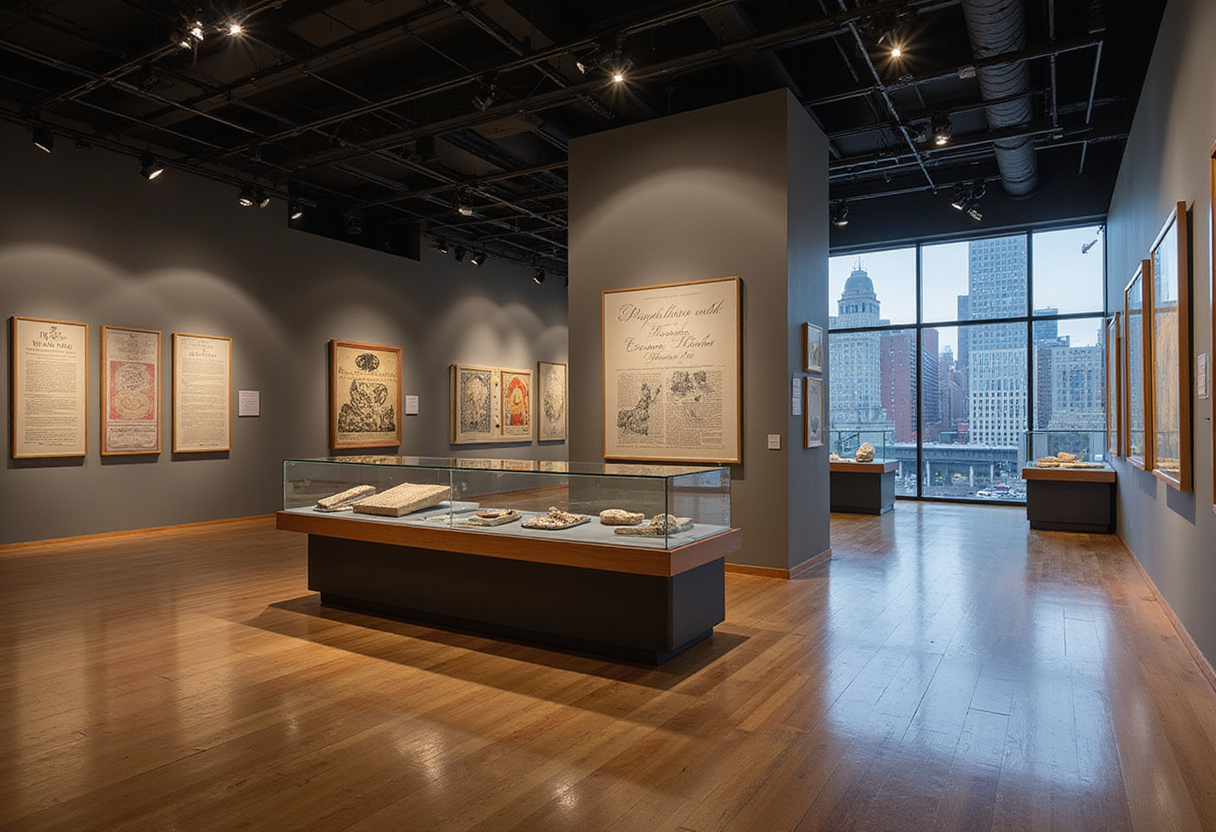
The Amon Carter Museum of American Art will open a Karl Struss retrospective in May, the Fort Worth Report confirmed this week. Struss's camera work on F.W. Murnau's "Sunrise: A Song of Two Humans" (1927) earned him the inaugural Academy Award for Best Cinematography at the 1929 ceremony — the first Oscar handed out in that discipline.
Struss (1886–1981) occupies a singular double position in twentieth-century American image-making. As a teenager he entered Alfred Stieglitz's Photo-Secession, exhibiting gum-bichromate landscapes in the landmark 1910 International Exhibition of Pictorial Photography at the Albright Art Gallery in Buffalo. Two decades later, his camera work on "Sunrise" earned him the first Oscar in cinematography.
That dual identity — gallery Pictorialist and studio cinematographer — has long split his reception. Photographic histories credit his prints; film histories credit his cinematography; nobody quite credits both. A retrospective at the Carter, an institution with deep holdings in American photography, offers a rare chance to reunite the halves under one curator's eye.
The Carter opened in 1961 to house publisher Amon G. Carter's Western art collection, then expanded into photography in the 1970s. It now stewards one of the country's most heavily used photographic study collections, with strengths in American landscape, modernist documentary, and Pictorialism. Struss materials have long occupied a place in that collection, which makes the museum a natural venue for a full career survey.
By Struss's own account, working in Hollywood "was a profession; the photography was the avocation." The distinction mattered to him; it has also shaped how scholars have parsed his archive, filing his gum-bichromate prints under fine art and his feature work under industry history. A retrospective that places the two side by side would let viewers do that comparative work in person.
Struss's Pictorialist prints tended toward a recognizable set of subjects: harbor mists, boardwalk promenades, weathered Long Island buildings, all in soft sepia. His Hollywood years produced some of the most carefully lit silent-era portraiture on screen; "Sunrise" alone took roughly six months to shoot, by most accounts. By the time he returned to fine-art photography in his later decades, the Pictorialist moment had passed, and his gum-bichromate prints looked, to mid-century eyes, like relics. They don't anymore.
Why does the timing matter?
The May opening follows a recent wave of curatorial interest in American Pictorialism. Stieglitz, Edward Steichen, and Gertrude Käsebier have all received major reassessments in the past decade, with shows at the National Gallery of Art, the Whitney, and elsewhere repositioning the movement away from its long-standing reputation as soft-focus kitsch. Struss, whose own Stieglitz-published prints appeared in Camera Notes as early as 1909, sits inside that reassessment rather than beside it.
What hasn't the museum said?
The Carter has not confirmed a curator, a checklist, or a precise opening day. The Fort Worth Report's notice cited May without further specifics, and the museum has not issued a press release at this writing.
That thinness tells its own story. Struss has been due a major retrospective for years. He worked steadily in Hollywood through the 1920s and 1930s, served as director of photography on productions for Paramount and other studios, and ran a teaching practice at the University of Southern California into the 1950s. The archive he left runs to thousands of negatives and prints, distributed across museums and private collections.
If the show follows the Carter's recent pattern, it will travel. The institution organized a 2024 survey of Eliot Porter that toured to three additional regional venues over eighteen months, including the Peabody Essex Museum. A traveling Struss retrospective would extend the Pictorialist reassessment well beyond Texas — and give Struss, at last, the institutional verdict his dual career has long deserved.
Key points
- Amon Carter Museum of American Art will open a Karl Struss retrospective in May (Fort Worth Report).
- Struss won the inaugural Academy Award for Best Cinematography in 1929 for F.W. Murnau's 'Sunrise: A Song of Two Humans' (1927).
- Struss (1886–1981) exhibited in the 1910 International Exhibition of Pictorial Photography at the Albright Art Gallery in Buffalo.
- The Amon Carter Museum opened in 1961 and expanded into photography in the 1970s.
- The Carter's 2024 Eliot Porter survey toured to three additional regional museums, including the Peabody Essex Museum, over eighteen months.
Source: Google News: photographer retrospective
Olivia Hart
Show full bio
Staff writer covering people, launches and day-to-day practice in Photography exhibitions, photographers, photo books, festivals and awards at Lens Gazette.