James Welling's 'Cento' Reanimates the Ancient Past at Fairfield
Fairfield University announces "James Welling: Cento," promising to reanimate the ancient past through photography — but discloses no dates, curator or images yet.
Updated
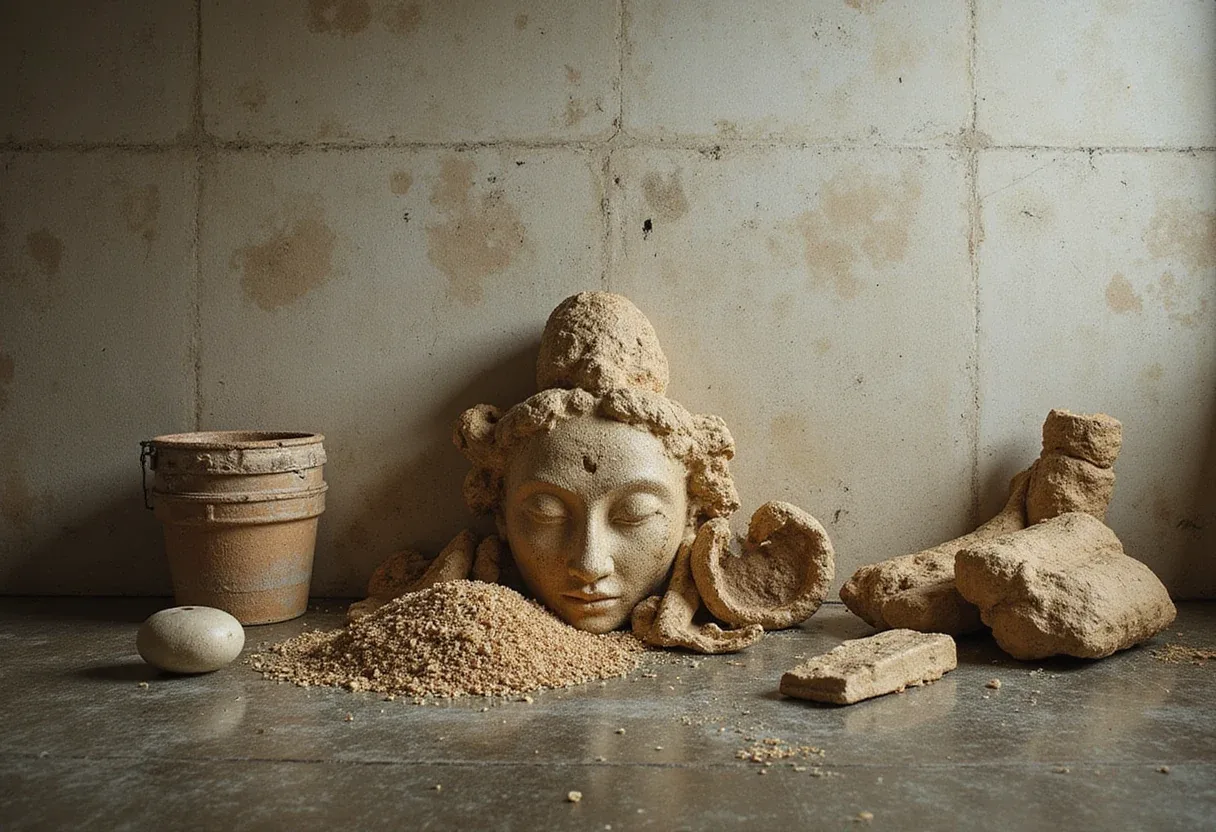
Fairfield University is showing "James Welling: Cento," an exhibition whose full title promises nothing less than reanimating the ancient past through photography. That is a tall order for any living artist. It is also exactly the kind of claim this column exists to stress-test.
Fairfield announced the show under the headline "Reanimating the Ancient Past in James Welling: Cento." Beyond that announcement, the university's public text gives us little: no opening date, no closing date, no curator named, no checklist. For an institution promoting an exhibition, that silence is notable. Readers deserve dates before they plan a trip to Fairfield, Connecticut.
Who is James Welling, and why does the title matter?
Welling is a photographer long associated with restless experimentation across series, processes and abstraction. The word "Cento" carries weight here. A cento, classically, is a patchwork poem assembled entirely from lines by other poets — an art of quotation. Applied to Welling, it suggests an exhibition built from borrowed fragments of the ancient world, recombined into something new.
That reading fits the announced theme. "Reanimating" implies the past arrives not as dead artifact but as living material. Whether Welling achieves that, or merely gestures at it, the announcement does not say. No individual images are described. No series is named in the public text. We know the ambition; we cannot yet judge the execution.
What does the exhibition actually claim?
The university's framing makes one promise: the ancient past, reanimated, through Welling's lens. Strip away the rhetoric and the concrete facts available are these:
- One named artist: James Welling.
- One venue: Fairfield University.
- One exhibition title: "Cento."
- One stated theme: reanimating antiquity.
- No dates, curator or image list disclosed in the announcement.
That is a thin public record for a show trading on so resonant a title. Institutions usually lead with a curator's name and a marquee loan. Fairfield led with a concept. Concepts are cheaper.
A skeptic's caveat, and a fair one
To be clear, none of this means the exhibition will disappoint. Welling's reputation rests on decades of formally inventive work, and the cento conceit — art made from art — suits a photographer who has always treated the history of images as raw material. The medieval poets who built centos from Virgil and Homer were doing something conceptually similar: reverence expressed through recombination.
But an announcement is not an argument. Until Fairfield publishes dates, a checklist and at least one reproduced image, the strongest claim a careful reader can make is this: a serious photographer is mounting a show about antiquity's fragmentary afterlife at a university gallery, and the institution has told us almost nothing else.
Where this heads next
Expect Fairfield to release exhibition details — dates, curator, public programs — ahead of any opening, and when it does, the checklist will tell us whether "Cento" is a genuine recomposition of the ancient canon or a stylish title in search of a thesis.
Key points
- Fairfield University announced the exhibition "James Welling: Cento".
- The show's stated theme is reanimating the ancient past.
- No opening or closing dates were disclosed in the announcement.
- No curator or image checklist appears in the public text.
- The title references the cento, a classical patchwork poem form.
Source: Google News: photography museum
Daniel Okafor
Show full bio
News editor covering companies, deals and strategy in Photography exhibitions, photographers, photo books, festivals and awards at Lens Gazette.