ICA Miami Doubles Down: Gensler to Convert De la Cruz Site by Late 2027
Gensler will convert ICA Miami's $25m De la Cruz building into eight galleries and a permanent home for its 2,000-plus works, opening late 2027 under a $40m campaign.
The Institute of Contemporary Art, Miami has appointed the global architecture firm Gensler to renovate a 30,000-square-foot building it acquired in 2024 — a move that will double the museum's exhibition and public-programming space. The new wing is scheduled to open in late 2027, coinciding with the museum's tenth anniversary at its current Design District home.
The story behind the address is nearly as compelling as the expansion itself. The building formerly housed the De la Cruz Collection, the private museum that closed following the 2024 death of its co-founder Rosa de la Cruz. ICA Miami paid $25m for the site later that year. Since then, it has mainly hosted the museum's educational programmes. It will close once construction begins.
The renovation anchors a $40m capital campaign, funded entirely by private money. Once complete, the project transforms the ICA into a multi-site complex steps away from its existing venue, with a brief that leans hard into community outreach for a museum that remains free to enter.
What changes inside the building?
Eight new galleries will occupy the first and second floors. Among them: the museum's first dedicated spaces for a permanent collection that now counts more than 2,000 works — a holdings base that has quietly outgrown the institution's current footprint.
Alex Gartenfeld, the ICA's director and chief curator, framed the design as an adaptation rather than a gut renovation. "The building was developed to house a contemporary art collection," he told The Art Newspaper. "But with the spaces we are constructing, we intend to enhance the museum's story-driven narrative approach to the collection and exhibitions."
That narrative will move on a steady rhythm. "The programme between the two buildings is blended, but we will now have two full floors dedicated to our permanent collection," Gartenfeld said. "Around every six months, we will refresh the collection display to reflect the collection's emphasis and recent acquisitions." For a museum that has spent a decade running on temporary exhibitions, that's a structural shift in how Miami sees its own contemporary art history — in six-month installments.
The entire third floor goes to public programming: talks, symposia, lectures and performances. Bevin Savage Yamazaki, Gensler's global culture and museums leader, cast the ambition in civic terms. "Beyond adding galleries, this renovation will strengthen the ICA's ability to support artists, expand learning and create a platform for exchange and belonging in one of the world's most dynamic cultural cities," she said.
How will the building meet the street?
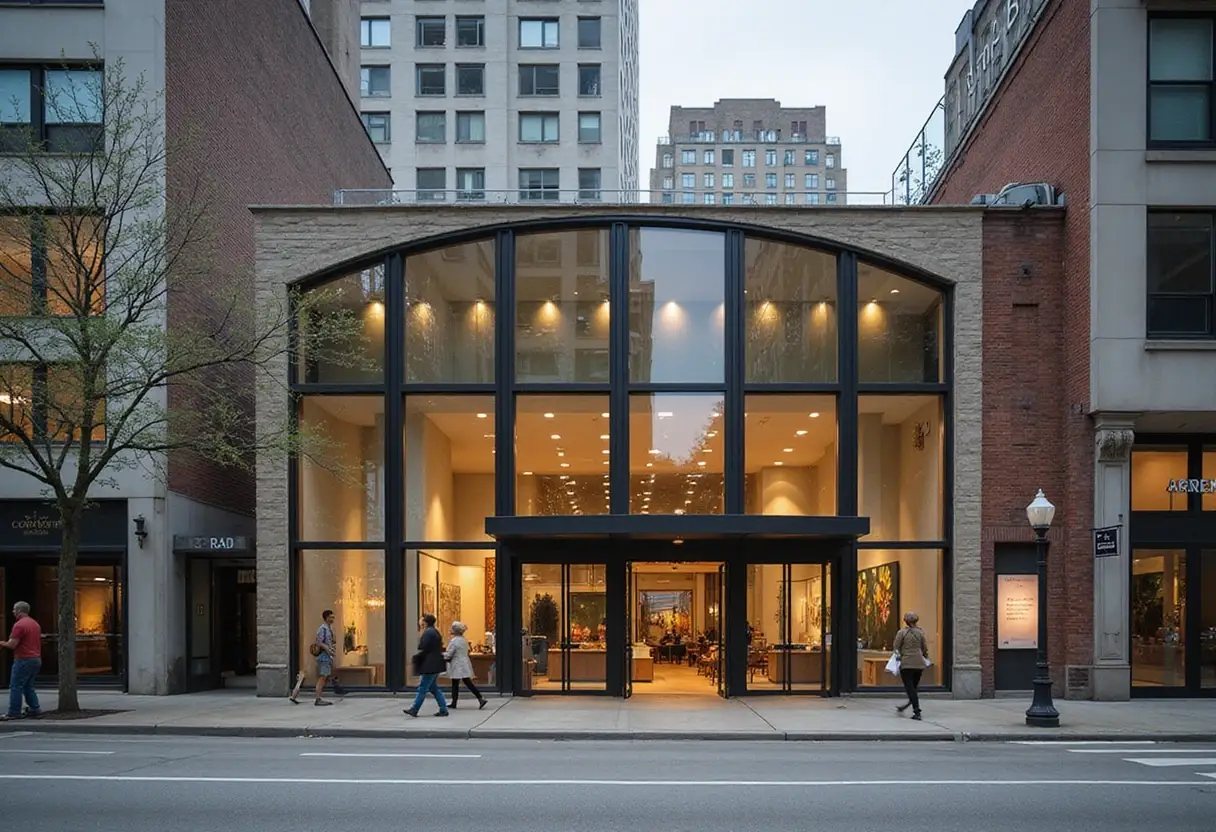
A reimagined façade with transparent components sits at the centre of the design. Gartenfeld says the façade aims to connect street-level traffic with the museum itself — a notable gesture in the Design District, where retail frontage usually does the seducing.
Visitor experience and accessibility get their own line items. The lobby will be redesigned. Reconfigured outdoor areas will include social spaces, a sculpture deck and an expanded café. "We are aiming to create a more collective experience," Gartenfeld said. The phrasing is telling: a museum that already charges nothing for admission is now engineering its architecture around linger time.
Why the timing matters
The 2027 opening lands on the ICA's tenth anniversary in its current building — a building the museum moved into in 2017 after outgrowing its original digs in the Moore Building. A decade in, the institution faces a familiar trajectory: free admission, growing attendance pressure and a collection that has swollen past 2,000 works with nowhere permanent to hang. The De la Cruz acquisition solved several problems at once, and at $25m for 30,000 square feet in the Design District, it reads as a decisive buy.
There is also the matter of inheritance. When Rosa de la Cruz died in 2024, Miami lost one of its defining private collectors, and the closure of her namesake museum left a gap in the neighborhood's cultural map. The ICA's expansion doesn't replace that collection — its contents dispersed separately — but it does restore the building to public contemporary art use, with free entry where the private model once held sway.
The capital campaign remains entirely privately funded, consistent with the museum's model since opening. No public money, no gate. Whether the $40m target covers the full build or simply the first phase, the museum hasn't said. What's on the record is the schedule: construction start unspecified, doors open late 2027.
For now, the building continues its interim life as an education site until the contractors arrive. By the ICA's tenth birthday, Miami's Design District will host a two-building contemporary art complex with a transparent façade, a sculpture deck, an expanded café and — for the first time — a permanent gallery floor plan that changes twice a year.
Key points
- ICA Miami appointed Gensler to renovate a 30,000-sq.-ft building acquired in 2024 for $25m, doubling exhibition space.
- The new wing opens in late 2027, marking the museum's tenth anniversary at its current Design District venue.
- Eight new galleries will include the first permanent display of the ICA's 2,000-plus-work collection, refreshed every six months.
- The renovation is part of a $40m capital campaign supported entirely by private funds.
- The building formerly housed the De la Cruz Collection, which closed after co-founder Rosa de la Cruz died in 2024.
Source: theartnewspaper.com
Olivia Hart
Show full bio
Staff writer covering people, launches and day-to-day practice in Photography exhibitions, photographers, photo books, festivals and awards at Lens Gazette.