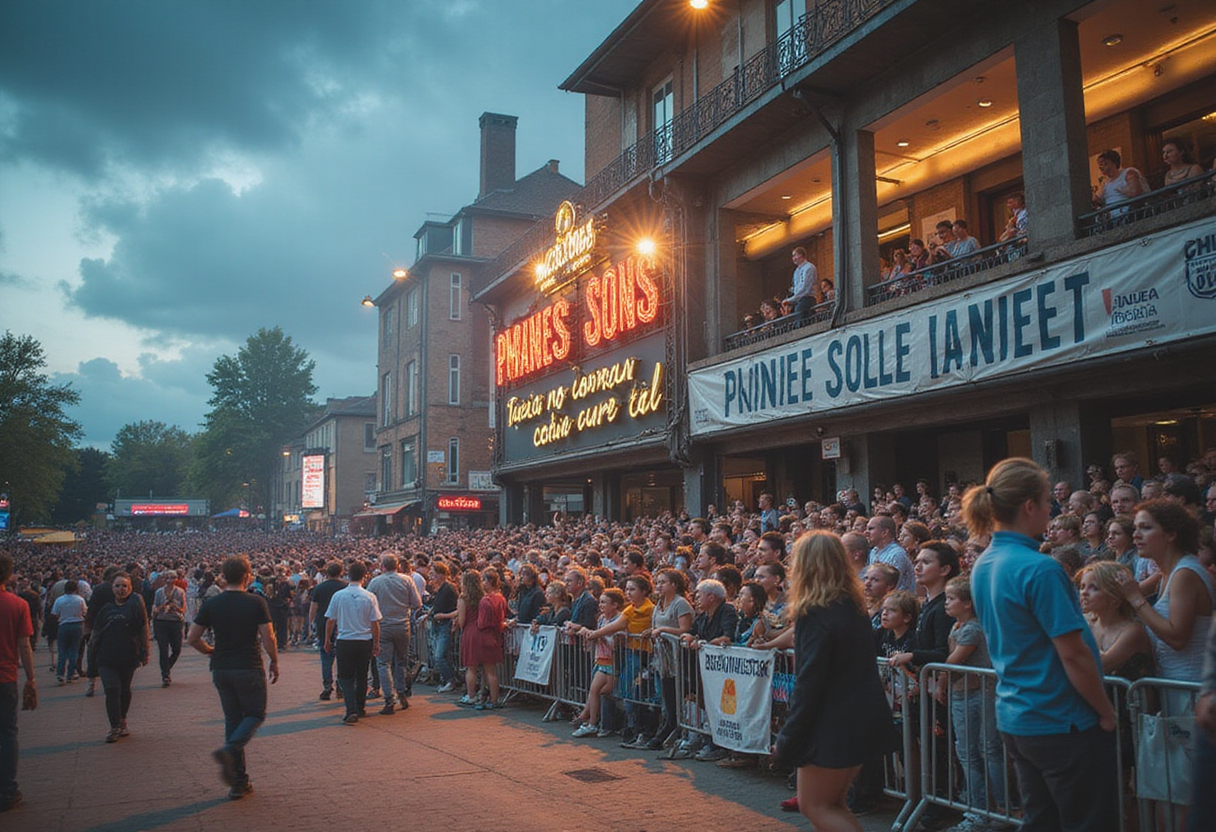
Huckabee likens Israeli photo removal at Indian festival to 1930s book burning
U.S. Ambassador Mike Huckabee has compared the removal of an Israeli photographer's work from an Indian photography festival to the book burnings of the 1930s, in remarks reported by the Cleveland Jewish News.
Updated
The U.S. Ambassador to Israel, Mike Huckabee, has condemned an Indian photography festival's decision to withdraw an Israeli photographer's work, calling the move "equivalent to book burning of 1930s" in remarks reported by the Cleveland Jewish News.
What did the festival actually do?
The Cleveland Jewish News headline refers to an Indian festival that "nixed" an Israeli photographer's photographs. The initial report does not name the festival, the city where it operates, the dates of its programme, the photographer involved, or the official explanation offered for the removal.
What it does establish is that a publicly programmed set of images was pulled, and that the act drew a sharply worded response from Washington's top envoy in Jerusalem.
How unusual is Huckabee's framing?
Cultural boycotts and the exclusion of national contingents have long shadowed biennials and photography festivals. Huckabee's chosen analogy is not. Comparing the suppression of images to the Nazi-era book burnings of 1933 and after connects a curatorial decision to the destruction of libraries, archives, and significant collections of modernist photobook publishing — losses scholars continue to document and to mourn.
By that light, the ambassador has cast the act of removing photographs from a festival programme as a form of cultural erasure rather than a logistical reshuffle.
Why does the framing matter for photography specifically?
Photographers whose prints or projected files are pulled late in the production cycle lose more than a venue. They lose catalogue copy, press cycles, festival juries' attention, and the chance to be seen by audiences who travel to a specific city for that programme. For an Israeli photographer working outside Europe and North America, an Indian festival would normally represent a particularly visible platform.
Whether the work reappears elsewhere on the international circuit — in a gallery show, a fair booth, or a publication — is not yet clear from the Cleveland Jewish News item.
What do we know, and what don't we?
The known facts in the initial report are narrow:
- Mike Huckabee, the U.S. Ambassador to Israel, made the comparison in public remarks.
- An Indian photography festival withdrew images by an Israeli photographer.
- The Cleveland Jewish News published the headline framing.
Not yet disclosed in the reporting are the name of the festival, the identity of the photographer, the date of the removal, whether it was a unilateral curatorial call or a response to external pressure, and whether other national contingents were also affected.
Where does this go from here?
Huckabee's intervention will almost certainly draw a counter-response — either from the festival organisers, from the photographer, or from cultural commentators on both sides of the boycott debate. Photography festivals have become a recurring site for such confrontations, and the pattern suggests that fuller details, including any festival statement and the precise scope of the withdrawn work, are likely to surface in the days ahead.
Key points
- U.S. Ambassador Mike Huckabee called the removal 'equivalent to book burning of 1930s'
- An Indian photography festival withdrew images by an Israeli photographer
- The remark was reported by the Cleveland Jewish News
- The festival's name, city, dates, and the photographer's identity were not disclosed in the initial report
- No official explanation from the festival organisers had been published at the time of the initial report
Source: Google News: photography festival
Grace Kim
Show full bio
Senior reporter covering consumer brands and retail at Lens Gazette.