Giuseppe Satriani's Complice il Muro: Painted Walls That Refuse to Stay Quiet
Giuseppe Satriani's Complice il Muro stages painted figures and living bodies in a single frame, reversing Pliny's founding myth of painting — and leaving the crack visible.
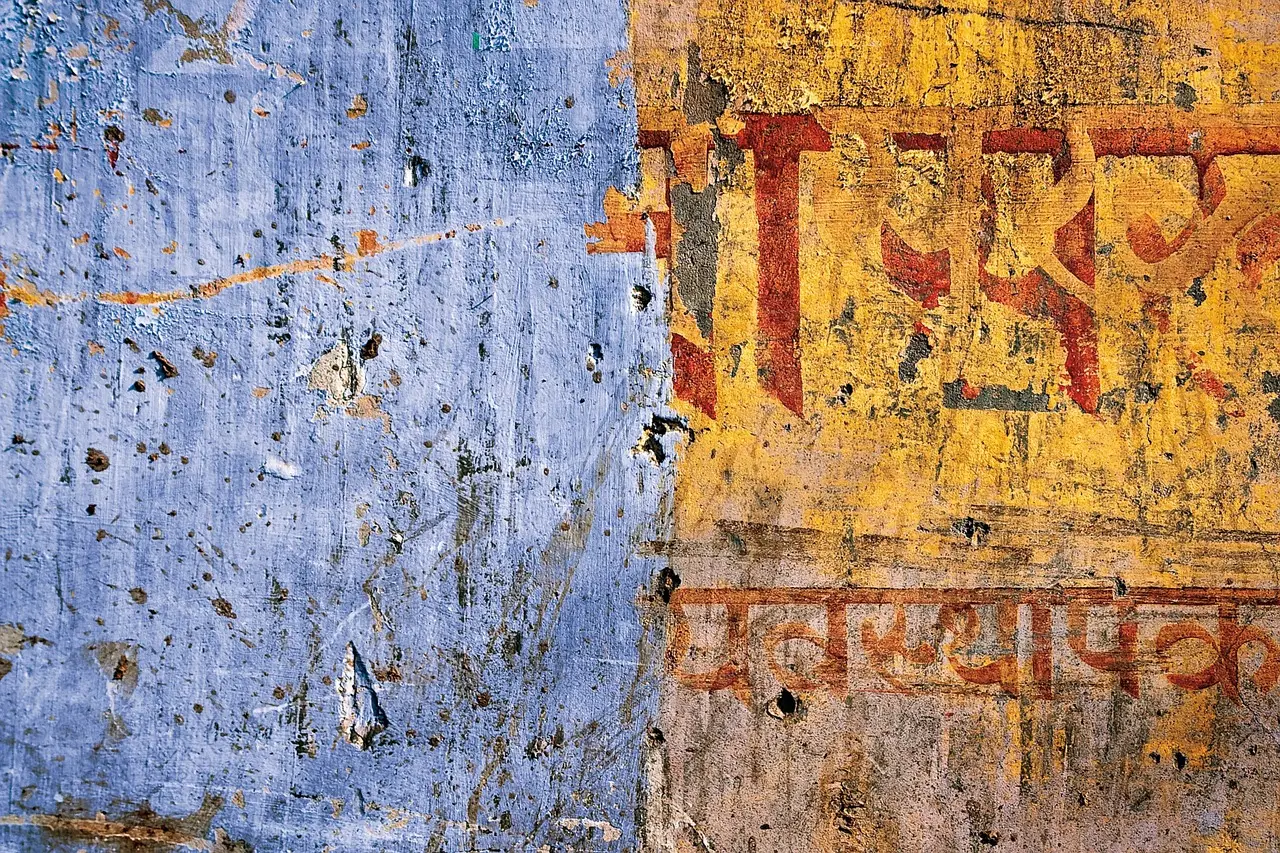
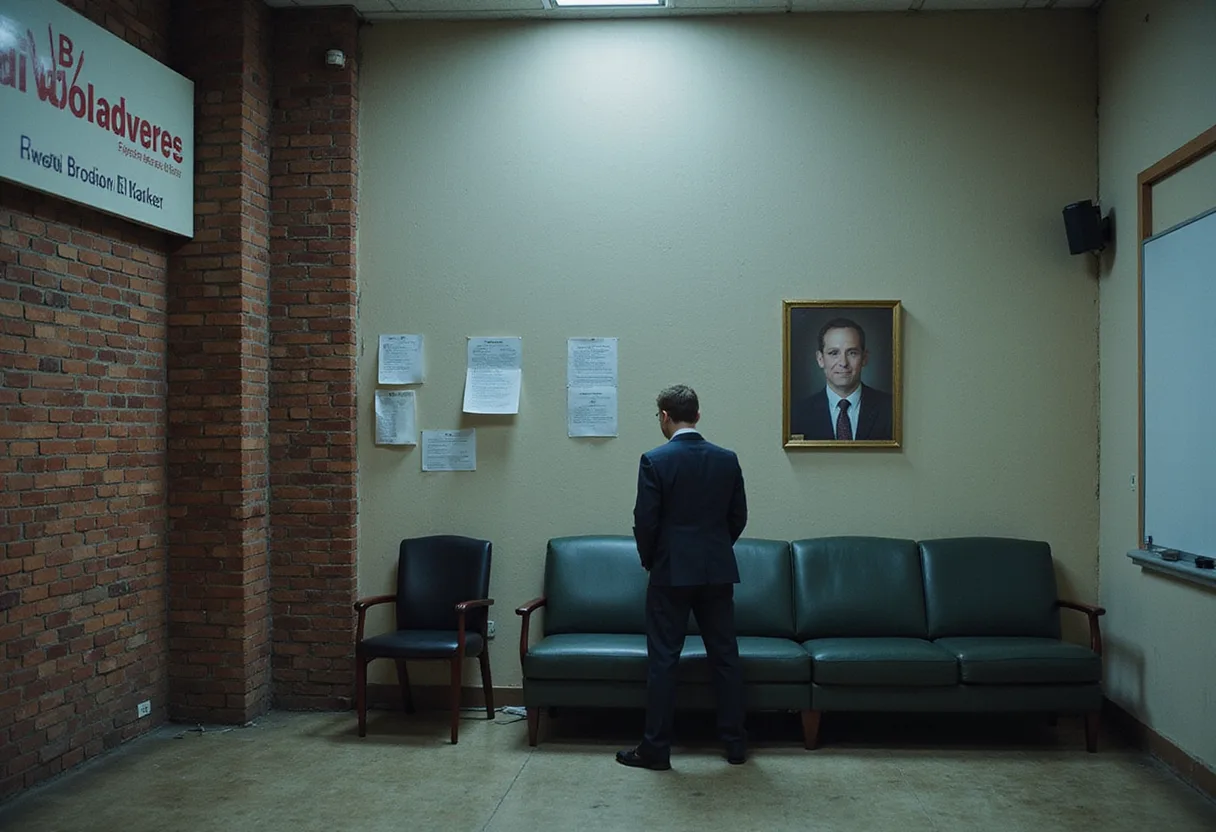
Giuseppe Satriani's series Complice il Muro (The Wall as Accomplice) opens with a suspicion and builds a whole theory of the image on it: a painted wall is never merely a backdrop, and no one standing before one is ever simply a passerby. Each photograph in the cycle brings a painted figure and a living body into the same frame, then lets the two presences negotiate.
The conceptual anchor is ancient. Pliny the Elder records that painting was born from a wall: in Corinth, the potter Butades' daughter traced the shadow of her departing beloved by lamplight, and her father filled the outline with clay. At the origin of the image, Satriani notes, lies a body about to be absent and a surface that preserves its silhouette. The series turns that myth inside out. Here the body is present, flesh and blood, while the painted figure has become equally present. Neither is an absence. Two forms of being — one pigment, one breathing — share the frame.
How does the wall behave?
The works catalogue distinct modes of complicity, escalating from the gentle to the invasive.
-
Imitation. In The Chemistry of Reading, two men read in their chairs while a third figure — painted on the wall between them, at the same height — conducts a chemical experiment. Nobody is surprised. The wall behaves like an uninvited guest nobody thinks to send away.
-
Surveillance. In Carneficina, Leonardo's Lady with an Ermine holds her animal above a butcher's counter, surrounded by hanging, dripping meat. She doesn't look at it. She looks at those who look — a reversal Georges Didi-Huberman titled a book after: What We See, What Looks at Us.
-
Testimony. In Football, a boy kicks a stone ball while a painted deer watches. The ball is stone. What weighs on a game that should be light?
-
Mockery. In The Chained, grey men drag iron balls in a line while the wall behind them explodes in carnival color. All the joy is painted; none of it belongs to them. The Woman in Green works a quieter disparity: a composed mother, a crying child in a stroller, an indifferent dog, and the actors of Neapolitan comedy enthroned on the wall behind. The street grants those idols a devotion it grants neither mother nor child.
-
Ancestral speech. In Prehistory, two Stone Age figures stand before painted beasts while a white car waits beside them. In She Who Is Near, men in bowler hats lower a coffin as the cause of death is painted on the wall — the wall already knows how it ends. In The Scooter and the Coffin, a coffin leans upright against a parked blue scooter like any ordinary object. The memento mori becomes street furniture.
Absorption. In The Hooded, purple-robed penitents cross a square while the painted wall repeats their procession endlessly. The present becomes fresco on contact.
The final image, Insetti, is the limiting case. Painted insects leave the wall one by one, cross bare plaster, and reach a glass table where they become real, casting their own shadows — the first arrival already devouring the next. The circle with Butades closes: in the myth, the body departed and the shadow remained; in Insetti, the figure leaves the wall and acquires a shadow. That is, a body.
Is the camera lying?
Every image begins as a straightforward photograph of a real place — a street, a corner, a façade that already carries its own painted image. Something that could not belong there is then introduced, and the boundary between the documented and the impossible stays visible. Satriani leaves the crack deliberately exposed so nobody mistakes the result for an unaltered photograph. The work doesn't seek deception: the viewer must feel both the "it has been" of the place and the "it has not been" of the event, and understand that the distance between the two is the true subject.
The wall, in these pictures, is neither witness nor defendant. It doesn't remain outside the scene, and it answers for nothing. It is folded into the frame alongside us — which is the series' real claim about representation itself, staged as a small catalogue of how images behave in the presence of life, from quiet friendship to open invasion.
One question stays open, and Satriani seems content to leave it that way: if the wall is an accomplice, what is it complicit in? His answer is a conjecture, not a verdict — perhaps in what every accomplice safeguards, a shared secret. In this case the secret is that image and life were never two separate things, and that placing them in the same frame was all it took for them to admit it.
Key points
- Complice il Muro is a photographic series by Giuseppe Satriani pairing painted wall figures with living bodies in a single frame.
- The series inverts Pliny the Elder's myth of Butades' daughter, in which painting was born from a shadow traced on a wall in Corinth.
- Works include The Chemistry of Reading, Carneficina (citing Didi-Huberman), The Chained, Prehistory and the closing image Insetti.
- Each photograph begins with a real location and leaves the manipulation visibly cracked, refusing photographic deception.
- The series frames the wall as accomplice rather than witness — folded into the scene, sharing responsibility for what takes place.
Source: Dodho Magazine
Olivia Hart
Show full bio
Staff writer covering people, launches and day-to-day practice in Photography exhibitions, photographers, photo books, festivals and awards at Lens Gazette.