David Lynch's Surreal Photographs of Los Angeles Go on View
David Lynch's surreal photographs of Los Angeles, made outside his film work, now hang in a new exhibition recasting the director as a serious still-image maker.
Updated
David Lynch's surreal photographs of Los Angeles are now on display in a dreamy new exhibition devoted to the director's lesser-known work behind a still camera.
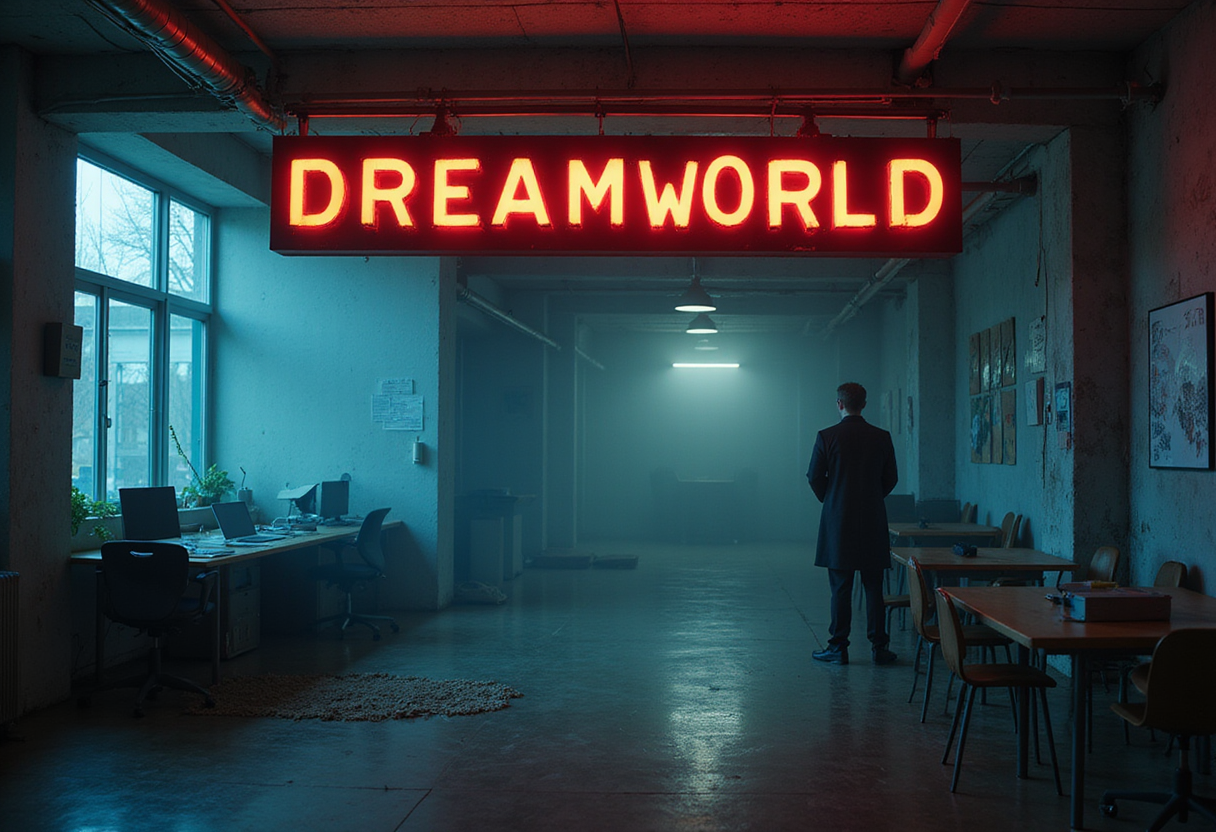
The show turns attention away from Lynch's reputation as the filmmaker behind some of cinema's most unsettling images and toward his photographic practice, a body of work that shares the same nocturnal, dislocated sensibility. Los Angeles, the city Lynch called home for decades, serves as both subject and atmosphere. In these pictures, the metropolis appears the way it does in his films: familiar on the surface, wrong underneath.
Lynch's relationship with the city is one of the defining artist-place pairings in American culture. He arrived in Los Angeles as a student at the American Film Institute in the late 1960s and stayed, transforming its banal architecture, industrial edges and seductive light into a recurring psychic landscape. The photographs extend that project into a medium where he worked quietly and persistently, alongside painting, printmaking, music and animation, throughout a career that ended with his death in January 2025 at the age of 78.
What distinguishes the photographic work is how directly it translates Lynch's visual grammar into still images. Where his films move, the photographs hold their breath. A viewer encounters the same preoccupations: darkness pressed against artificial illumination, empty spaces charged with implied narrative, the sense that something has just happened or is about to. Los Angeles supplies the raw material — its streets, its hedges, its anonymous interiors — and Lynch's camera renders it strange.
The exhibition format is significant for the work's standing. Photography by directors has often been treated as a footnote to the main oeuvre, promoted through film tie-ins rather than examined as an artistic practice in its own right. Giving Lynch's photographs dedicated wall space places him in the company of filmmakers such as Stanley Kubrick, who began as a still photographer, and Wim Wenders and Abbas Kiarostami, whose photographic work earned serious institutional attention late in their careers. Lynch's images belong to that lineage: pictures made by an eye trained on framing, light and duration, liberated from duration altogether.
For Los Angeles itself, the show carries a particular charge. The city has been photographed exhaustively — by documentarians mapping its sprawl, by artists chronicling its social fabric, by generations of image-makers drawn to its light. Lynch's contribution to that vast archive is deliberately unfaithful to fact. His Los Angeles is not a place recorded but a place dreamed, filtered through the sensibility that once described himself with the phrase he used as the title of his memoir: "Room to Dream." The photographs are exactly that — rooms to dream in.
Visitors expecting production stills or behind-the-scenes material should adjust their expectations. This is personal work, made with the autonomy of someone who never needed a photograph to justify itself commercially. That freedom shows. The images do not illustrate the films; they run parallel to them, drawing from the same well of American gothic and postwar unease that Lynch refined across five decades.
The timing of the exhibition also matters. Since Lynch's death, institutions and audiences have been reassessing the full breadth of his output, and the plastic and photographic works have moved from the margins of that reassessment toward its center. A show of his Los Angeles photographs now functions as both a memorial gesture and a critical argument: that Lynch was never only a filmmaker, and that the photographs are not auxiliary material but a complete practice with its own logic and rewards.
For those in Los Angeles, the exhibition offers something rare — the chance to stand inside the city and look back at its distorted double at the same time. For everyone else, it signals that Lynch's visual estate continues to open, and that more of his photographic work will likely reach gallery walls as archives, estates and curators continue to map what he left behind.
Key points
- A new exhibition presents David Lynch's surreal photographs of Los Angeles.
- The photographic work runs parallel to Lynch's films, sharing the same nocturnal, dislocated vision of the city.
- The show follows Lynch's death in January 2025 at age 78, amid a broader reassessment of his non-film work.
Source: Google News: photography exhibition
Grace Kim
Show full bio
Senior reporter covering consumer brands and retail at Lens Gazette.