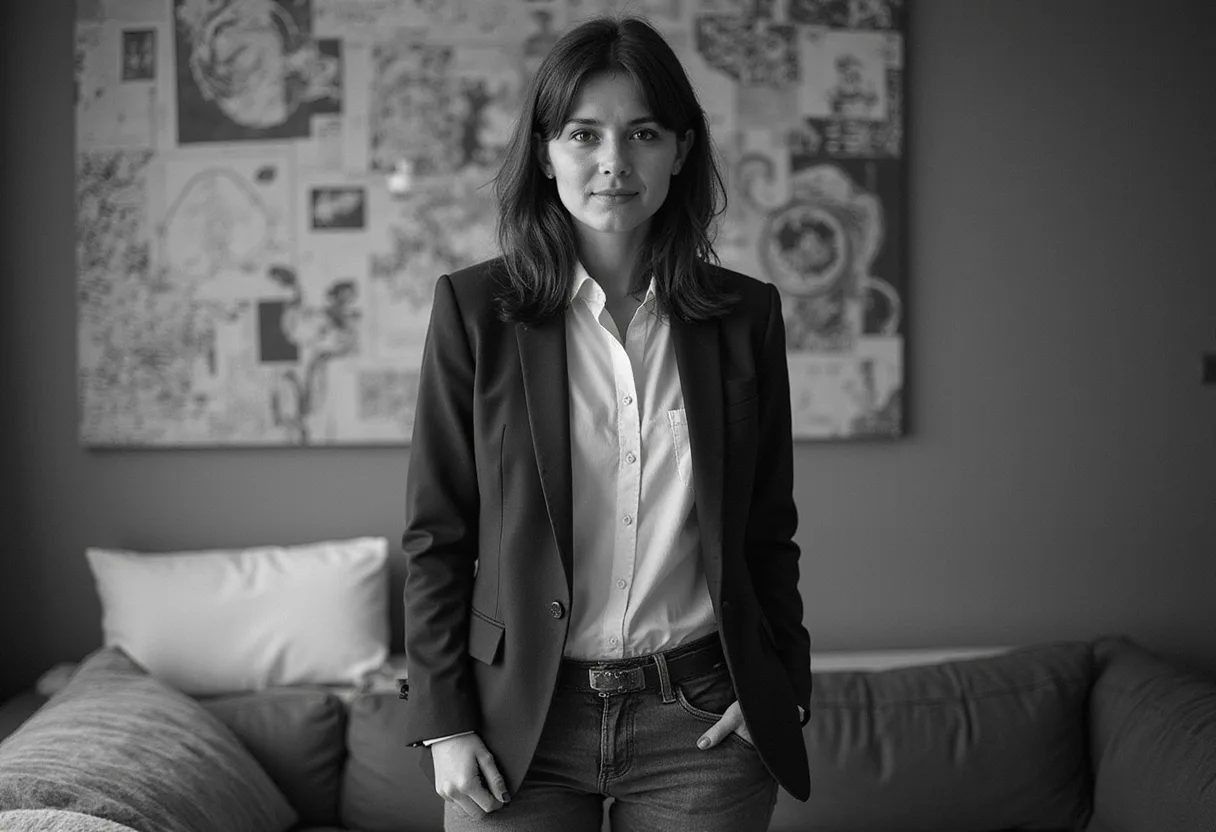
Chantal Lesley Lays Grief to Rest in Dreamlike New Series
Chantal Lesley's 'As I Lay It All To Rest' began with a 2022 photograph of a tattoo being removed — and grew into a series on grief, coexistence, and letting go.
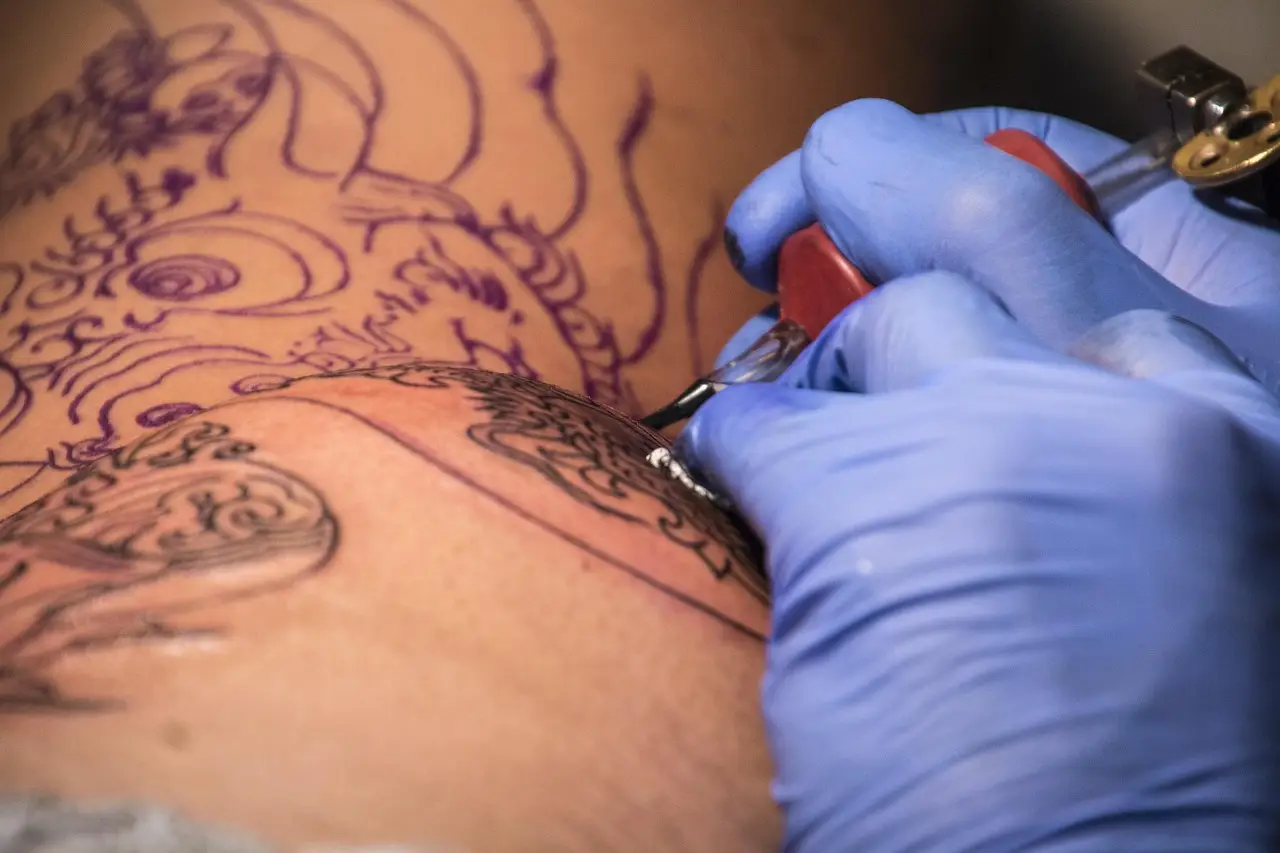
Austin-based photographer Chantal Lesley's series As I Lay It All To Rest began with a single image made in 2022 — her own foot, tattooed with a reference to Shel Silverstein's The Giving Tree, which she removed photographically because laser removal wasn't in her budget. That picture, Outgrowing Pains, sat alone for nearly three years before it became the seed of a full body of work on grief, release, and what we carry.
The series is featured on Lenscratch following Lesley's submission to nice;04, the fourth annual contemporary art exhibition organized by Midwest Nice Art, the collective founded by Epiphany Knedler and Tim Rickett. Knedler's introduction to the work frames its effect plainly: the images are "uncanny and surreal, with the hint of a dream you may have had but can't remember."
Who is Chantal Lesley?
Lesley is a first-generation American raised on the U.S./Mexico border, the daughter of Peruvian and German immigrants. She earned her BFA in Fine Art Photography from Texas State University in 2021. Her work has shown nationally at Houston Center of Photography, Touchstone Gallery, and Humble Arts Foundation, and she has completed residencies at LATITUDE in Chicago, Vermont Studio Center, Château d'Orquevaux in France, KUNSTRAUM in Brooklyn, and Kala Art Institute in Berkeley. She is a current member of ICOSA, an artist-run collective gallery in Austin.
Her practice spans photography, textiles, and sculpture. Photography grounds the work in the real, she says, while textiles weave fragmented narratives and sculpture gives shape to the ephemeral.
What does the series actually examine?
As I Lay It All To Rest emerged from a period around 2022 when, in Lesley's words, "almost everything felt like it was unraveling," forcing a confrontation with her mental and emotional health. She needed somewhere to put grief, regret, shame, and the stories she kept replaying. Making work became the way through.
Crucially, she couldn't make it while inside the experience. "Everything was too close," she said. Distance came first, then a calmer, more contemplative approach. That distance reshaped her understanding of healing itself.
"For me, laying something to rest doesn't mean forgetting it or reaching some perfect sense of closure," Lesley explained. "It means getting to a point where something can exist in your life without continuing to control it. The grief is still there. The memories are still still there. But instead of fighting them, I can sit beside them." Her summary is blunt: not closure, but coexistence.
Outgrowing Pains carries that argument. In her early 20s, Lesley identified with the Giving Tree's constant self-sacrifice. In her 30s, she recognized how unhealthy that boundaryless self was — and removed the tattoo through the photograph instead of a clinic. The image became, in her words, the first visual articulation of a question: what parts of ourselves do we have to let go of to become healthier versions of ourselves? She likes that the photographs can hold something difficult without feeling difficult to look at.
How does she work?
Roughly 70% of the work happens in her head before she picks up a camera, Lesley estimates. Ideas start with language — a journal entry, a conversation, a single word that produces a vivid mental image. She sketches, refines the composition mentally, then shoots quickly. She leaves room for accident, but the final photographs often land close to what she imagined. She calls herself a visual poet.
The series also marks a deliberate shift. Work once rooted in multicultural identity has moved toward universal territory — grief, memory, change, emotional weight. The move felt vulnerable, she admits, but showed her that personal experience can be a starting point rather than a limit. She describes the work as a lighthouse: something put out into the world, hoping it finds the people who need it.
What's next?
No announced exhibitions or projects. Lesley says she's in an in-between stage of thinking and journaling. The one concrete thread is early-stage and long-form: a collaboration with her cousin, the self-described family archivist, researching how their families stayed connected across distance in the 1990s and early 2000s — the forms of communication, the records, and what they reveal about migration and relationships alongside evolving technology. It's still in the research and collecting phase. What comes of it is, for now, deliberately unresolved — the same in-between space her photographs ask viewers to sit in.
Key points
- Chantal Lesley's series As I Lay It All To Rest originated with the 2022 photograph Outgrowing Pains.
- Lesley earned her BFA in Fine Art Photography from Texas State University in 2021.
- She was featured via submission to nice;04, the fourth annual exhibition by Midwest Nice Art.
- About 70% of her process happens mentally before she picks up a camera, by her own estimate.
- Residencies include LATITUDE, Vermont Studio Center, Château d'Orquevaux, KUNSTRAUM and Kala Art Institute.
Original: midwestnice.art
Marcus Bennett
Show full bio
Correspondent covering companies, deals and strategy in Photography exhibitions, photographers, photo books, festivals and awards at Lens Gazette.