Bioluminescent Mould and Sleeping Bats Win European Wildlife Photographer of the Year 2026
Imre Potyó's bioluminescent pin mould growing on bat guano beat 26,000 entries to win the GDT's European Wildlife Photographer of the Year 2026 grand prize.
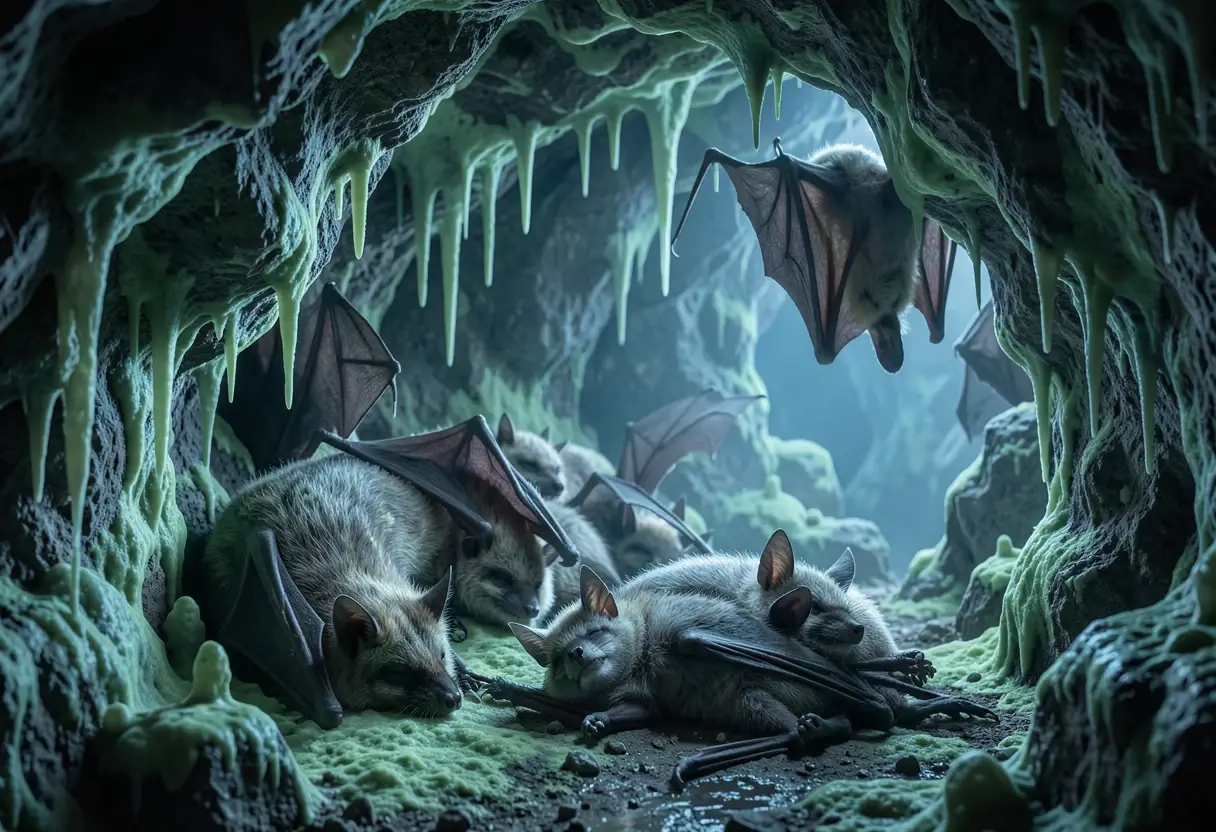
Hungarian photographer Imre Potyó has won the European Wildlife Photographer of the Year 2026, beating more than 26,000 other entries in the 26th annual competition run by the German Society for Nature Photography (GDT). His winning frame shows bioluminescent pin mould growing on a layer of bat guano, with dozens of hibernating bats dimly visible behind it, safely lit by a flashlight.
It's a picture of a fungus, and it took the grand prize. That tells you something about where nature photography's most interesting work is heading.
Who is Imre Potyó, and how did he get the shot?
Potyó is a scientist and environmental expert as well as a photographer, and he's no stranger to either bats or prizes. He has spent 13 years photographing bats in protected, restricted-access mine tunnels in Hungary. His work has already earned honors at Hungary's Nature Photographer of the Year, the Grand Prix of Hungarian Nature Photography, the UK's Wildlife Photographer of the Year, and the HIPA contest.
The winning image came from patience and craft, not luck. As Potyó explains: "A key characteristic of the lesser horseshoe bat (Rhinolophus hipposideros) is that, during hibernating it occasionally wakes and leaves its roost to hunt flying insects. In doing so, the bat leaves behind droppings that gradually accumulate into a continuous dark layer."
That layer became his subject. "In the beam of a torch, a whitish coating can be seen on the guano – a small pin mould thriving in this unusual habitat," he says. "Using a macro lens, I captured the mould in the foreground with the hibernating bats visible in the background. The photograph, a long exposure incorporating a focus shift, was taken during a controlled bat count and without disturbing the animals."
What did the jury say?
Tom Gilks, speaking for the competition jury, framed the image in ecological rather than aesthetic terms. "This image speaks to a larger truth about the natural world: much of life exists beyond our immediate awareness, in places we seldom visit and among organisms we rarely notice," he said. "Even within this single frame, bats, fungi and countless microorganisms form part of a web of relationships that quietly sustains life while remaining largely unseen."
His closing point was bleaker. "At a time of unprecedented biodiversity loss, many of these worlds are disappearing before they have even been properly documented, let alone understood," Gilks concluded.
Who else won?
The competition awarded winners and runners-up across nine major categories, two of them reserved for young photographers. The categories:
- Birds
- Mammals
- Other Animals
- Plants and Fungi
- Landscapes
- Underwater World
- Humans and Nature
- Nature's Studio
- Young Photographers up to 14 Years, and Photographers 15–17 Years
The youth categories list winners only, while the senior categories name winners and second-place finishers. A separate pool of Highly Commended images is viewable on the GDT's website.
What about the special prizes?
Earlier this month, the GDT announced the Rewilding Europe Award, which went to Polish photographer Jan Wieczorek for a nighttime portrait of city-dwelling beavers — proof, per the competition, that people and wildlife can coexist even when the wildlife is just outside the doorstep.
The Fritz Pölking Prize, given annually to a distinguished photo project or portfolio in honor of the late photographer and writer Fritz Pölking, went to Dutch photographer Michiel van Noppen. His series, Tales of the Forest Keepers, documents the symbiotic relationship between the Baird's tapir and the very rare Jícaro Danto tree, which depends on the tapir for its survival.
The Fritz Pölking Junior Prize went to young Norwegian photographer Tobias Gjerde for The Magic of the Nordic Wilderness, a set of expertly crafted minimalist compositions capturing the harsh, beautiful Nordic landscape.
Image credits: European Wildlife Photographer of the Year, German Society for Nature Photography; individual photographers credited in captions.
A grand prize awarded to mould on bat droppings is a quiet argument that the category's centre of gravity is shifting from spectacle to interdependence — and with the 27th edition opening next year, it will be worth watching whether that argument holds.
Key points
- Imre Potyó won European Wildlife Photographer of the Year 2026, beating over 26,000 entries in the 26th annual GDT competition.
- The winning image shows bioluminescent pin mould on bat guano with hibernating lesser horseshoe bats behind, made during a controlled bat count.
- Potyó has photographed bats in restricted Hungarian mine tunnels for 13 years.
- Michiel van Noppen won the Fritz Pölking Prize for Tales of the Forest Keepers; Tobias Gjerde took the Junior Prize.
- Jan Wieczorek of Poland won the Rewilding Europe Award for a nighttime portrait of city beavers.
Original: gdtfoto.de
Olivia Hart
Show full bio
Staff writer covering people, launches and day-to-day practice in Photography exhibitions, photographers, photo books, festivals and awards at Lens Gazette.