Azadi: Daniil Zozulya's Portraits of Young Afghan Exiles
Over three winter months in Brussels, Daniil Zozulya photographed young Afghan exiles living in tents outside a FEDASIL building — a series about identity, trust and freedom.
Updated
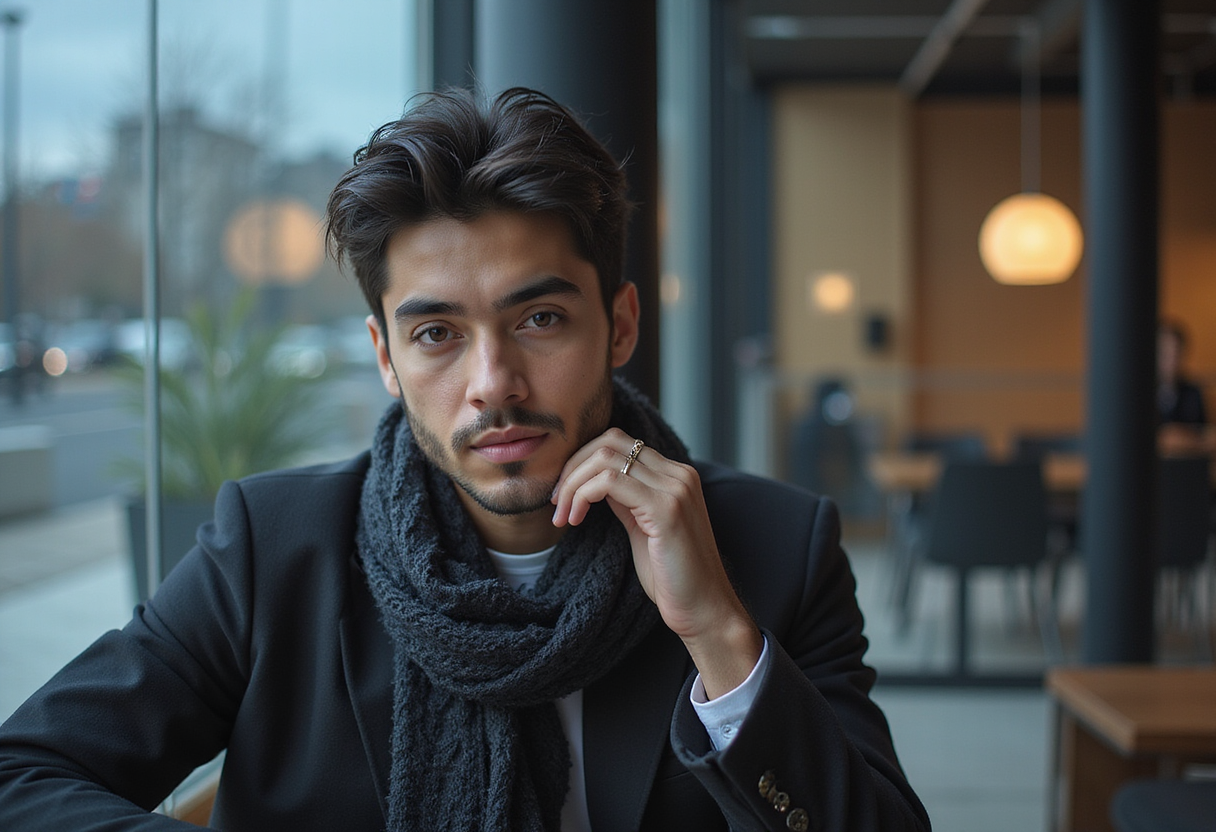
In September 2022, Belgian photographer Daniil Zozulya met a group of young men from Jalalabad, Afghanistan, in the centre of Brussels. They noticed his camera and asked him to join them. Over the following three months, that encounter grew into "Azadi" — a series named after the Pashto word for "freedom" or "liberation" — now standing as one of the most considered bodies of work to emerge from Zozulya's master's studies in Documentary Photography and Fine Arts at KASK, which he completed between 2021 and 2024 after a bachelor's degree at ESA Le 75 in Brussels.
The men Zozulya photographed were living in tents in front of the building now used by FEDASIL, the Federal Agency for the Reception of Asylum Seekers. The winter of 2022 was particularly harsh and rainy. Their living conditions were terrible, and it took the government six months to reach a decision and help them find a safe place.
Their reasons for leaving were unambiguous. The Taliban's takeover in 2021 forced them from their homes and jobs, and they knew they would be among the first people the new regime would persecute: most had been police officers or military personnel trained by the American army. They left, Zozulya writes, because they wanted to preserve their freedom. Since then, the situation in Afghanistan has remained extremely difficult.
What distinguishes "Azadi" from the familiar corpus of migration documentary is Zozulya's stated refusal to treat living conditions as his primary subject. "Showing their living conditions was inevitable and important, but it was neither the main focus nor my primary motivation," he says. His intention was "to understand the relationship we could establish with one another and to break through the barrier of the simple 'photographed subject–camera–photographer' relationship."
That shift in emphasis changed the pictures themselves. Gradually, photography became part of the time the group spent together. The men enjoyed posing, and Zozulya recalls how happy it made them. "The camera became less a tool for documenting their situation and more a reason to meet them," he writes. "They trusted me and allowed me to tell their story."
The recurring theme that emerged from this collaboration was Afghan identity. As Zozulya continued documenting the men, he came to understand that their primary motivation was to proudly show where they came from. Some wore traditional clothing; others chose to be more explicit, wearing the colours of the Afghan national flag or other symbols connected to their culture and history. The series becomes, in this sense, a record of self-presentation rather than victimhood — the sitters directing their own image at a moment when the country that produced that image had been taken from them.
The project also sits at the intersection of Zozulya's parallel writing practice. He made the work while writing a short essay about the role of photography and the image in the construction of an individual's identity, and he was preoccupied with the responsibility of the photographer in relation to the bond created with the people photographed, as well as with the motivations behind making images at all.
His method reflects those ethical concerns in a concrete way. Zozulya usually works with film, and the final result takes time to emerge — a delay during which, as he notes, it can be difficult to maintain complete transparency with the people being photographed. For "Azadi" he switched to digital. Showing the men the photographs directly on the back of his camera allowed him to build their trust, and in the evenings, after photographing them, he would send low-resolution versions of the images taken just hours earlier via WhatsApp. The choice of tool here is not a matter of convenience but of accountability: the sitters saw the pictures as fast as the photographer did.
Zozulya is based in Brussels and works primarily in documentary photography while also exploring fashion, the music industry and portraiture. Across that practice, his stated focus is on the ways human beings evolve, interact with, and adapt to their environments — a concern "Azadi" renders in unusually intimate terms.
The work carries a dedication: to Sadad, Sahel, Jan, and Tassal. Whether the series travels to further exhibition venues or expands beyond its three winter months in Brussels, Zozulya has signalled where his photography is heading — toward collaborative portraiture in which the relationship, not the apparatus, produces the image.
Key points
- Daniil Zozulya began 'Azadi' in September 2022 after meeting young men from Jalalabad in central Brussels, photographing them for three months.
- The subjects lived in tents outside the building now used by FEDASIL, the Federal Agency for the Reception of Asylum Seekers; the government took six months to help them find a safe place.
- Most of the men were former police officers or military personnel trained by the American army who fled after the Taliban takeover of 2021.
Source: Dodho Magazine
Marcus Bennett
Show full bio
Correspondent covering consumer brands and retail at Lens Gazette.