8:32 AM: The Film Recovering Robert Landsburg's Final Frames
Marq Evans's 8:32 AM recovers Robert Landsburg, who died shielding his Nikon F2 and Kodachrome at Mount St. Helens in 1980, through family testimony and his archive.
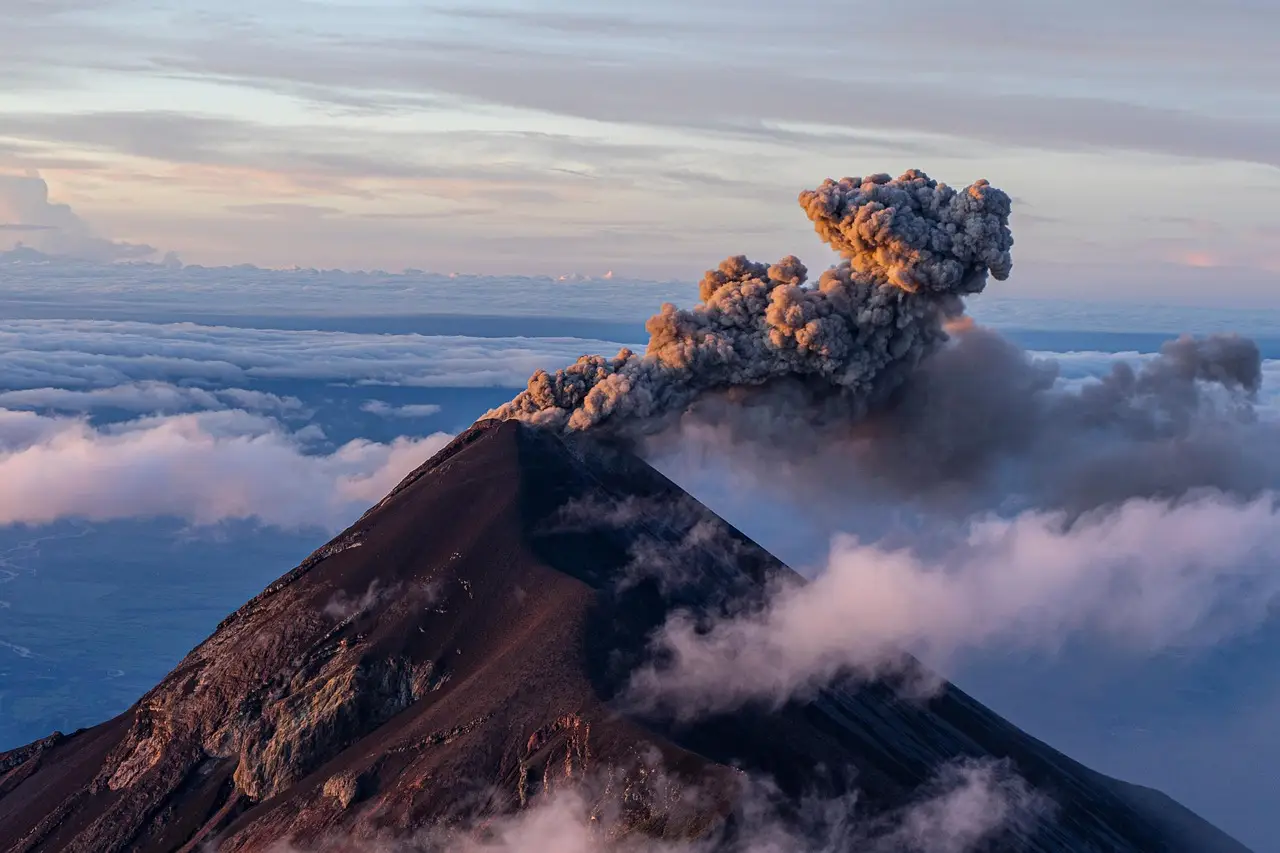
Seventeen days after Robert Landsburg died at Mount St. Helens, processors developed the Kodachrome 64 film he had shielded with his body, and National Geographic published the frames posthumously. Now filmmaker Marq Evans has turned that final act into 8:32 AM: The Last Photographs of Robert Landsburg, a short documentary that gives the photographer — long reduced to the story of his death — a fuller life on screen.
Landsburg had spent the weeks before May 18, 1980 documenting the volcano in Washington State. When it erupted and he realized he could not outrun the approaching ash cloud, he kept photographing for as long as possible, then wrapped his Nikon F2 Photomic and the roll inside it in his body. The film survived; he did not. The photographs, published in National Geographic, fulfilled what Evans describes as a lifelong dream and gave geologists valuable documentation of the historic eruption.
Why did the story take 45 years to tell?
Evans came to the subject through a gap in the record. Search for Landsburg online and, Evans found, the same few sentences repeat endlessly.
"I was shocked that there was really nothing else out there about him," Evans tells PetaPixel. "It was page after page on Google with articles just retelling that exact same stories, and I wanted to know. It was that curiosity that led me to reach out to his family."
Tracking the family down "took a little detective work." Evans traced them through the obituary of Landsburg's late brother, reached the brother's wife through an old AOL email address, and from there connected with Landsburg's niece Jill Dutchess, who agreed to help tell the story publicly for the first time.
"The family had never talked about the story before publicly, because it was a very difficult time for them and remained raw for a long time," Evans explains. "But they were open to telling this story for the first time, and it's been a really nice relationship collaborating with them on it."
The film gives viewers unprecedented access to Landsburg's surviving camera, journals and archive, with family members speaking on camera about him for the first time.
What does the film correct about Landsburg?
Evans wants to displace the martyr-narrative with the working photographer behind it. "First, I'm glad I'll be able to share more about who Robert Landsburg was, beyond just the small part of his story that is on the internet," he says. "He was a professional and dedicated photographer, and he believed he was in a safe area photographing what he knew would be a once-in-a-lifetime opportunity."
That detail matters for practitioners. Landsburg was not reckless; he made a professional judgment about a once-in-a-lifetime assignment, and the margin between safety and catastrophe closed faster than anyone could have accounted for. His last frames are fieldwork, not stunt.
Evans also frames the story against present anxieties about synthetic images. "Beyond that, there's just something about his dedication to the craft that, in this day of AI and when a photo can be created by anyone without even being there, that not only was he there but he understood the value of something real and would fight to preserve that," he says.
Where does the project go next?
Evans has released two short cuts of 8:32 AM on YouTube and Instagram, running three and five minutes. He plans a longer film featuring re-creation footage shot on 8mm at Mount St. Helens, with completion targeted for the end of the year. Further details are available on the documentary's official website and its Instagram account. If the feature retains the family's testimony and the archive's material weight, Landsburg may finally be known for his practice rather than only for how it ended.
Key points
- Robert Landsburg died in the May 18, 1980 eruption of Mount St. Helens while shielding his Nikon F2 and Kodachrome 64 film with his body.
- His film was developed 17 days after his death and published posthumously in National Geographic.
- Filmmaker Marq Evans has released 3- and 5-minute versions of 8:32 AM on YouTube and Instagram, with a longer film using 8mm re-creation footage due by year's end.
- Landsburg's family speaks on camera for the first time, providing access to his camera, journals and archive.
Original: 832am.com
James Calloway
Show full bio
Market editor covering people, launches and day-to-day practice in Photography exhibitions, photographers, photo books, festivals and awards at Lens Gazette.